
Products Description LEANOMS
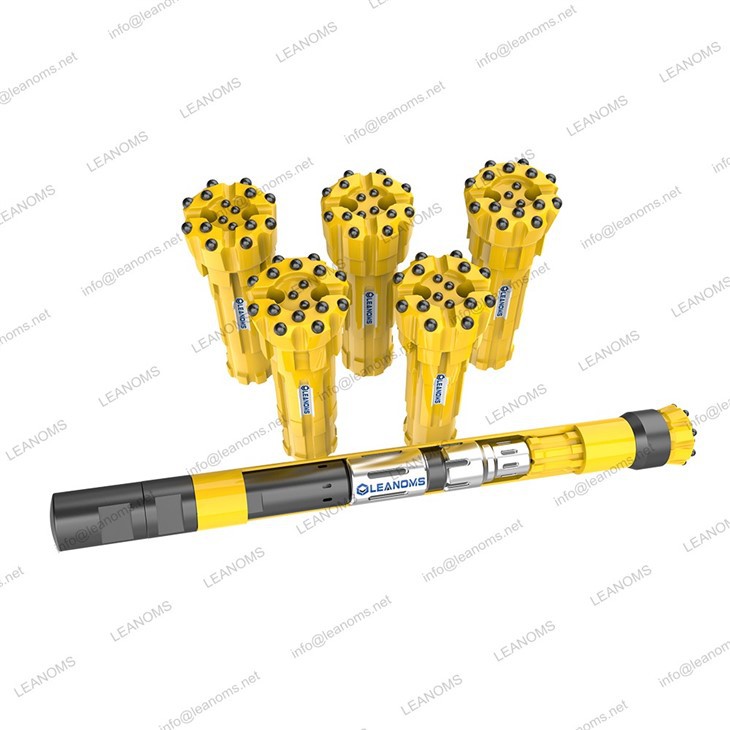
Reverse circulation (RC) hammer and bits are an integral part of the RC drilling process. The hammer is responsible for delivering high-pressure air to the bit, which then pulverizes rock and creates cuttings that are circulated back to the surface through the RC drill pipe. Here are some of the key technologies used in RC hammers and bits:
1. Piston Design: The piston is the heart of the hammer and is responsible for generating the hammer blows that drive the bit into the rock. Modern RC hammers use advanced piston designs that optimize the transfer of energy from the compressed air to the piston and ultimately to the bit.
2. Bit Design: RC drill bits come in a variety of shapes and sizes, each designed for specific drilling conditions. Features like carbide buttons, face shapes, and air holes are carefully engineered to maximize cutting efficiency and reduce wear.
3. High-Pressure Air: RC hammers require a constant supply of high-pressure air to operate effectively. Modern drilling rigs are equipped with sophisticated compressors and air delivery systems that can deliver air pressures of up to 350 PSI or more.
4. Material Selection: To withstand the intense vibrations and stresses generated by RC drilling, hammers and bits are typically made from high-strength materials like alloy steel or tungsten carbide.
Overall, the technology behind RC hammers and bits has evolved significantly over the years, driven by a need for greater drilling efficiency and accuracy. Today's RC drilling equipment is highly advanced and capable of drilling deeper, faster, and with greater precision than ever before.

Specification LEANOMS
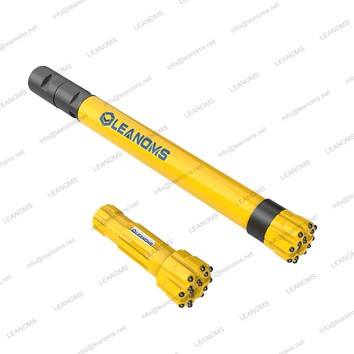
To ensure the quality and reliability of reverse circulation (RC) hammers and bits, manufacturers employ a range of quality control measures throughout the production process. Here are some of the key ways that factories control the quality of RC hammers and bits:
1. Material Inspection: Raw materials like steel and tungsten carbide are carefully inspected for purity and consistency before they are used to manufacture hammers and bits. This ensures that the final products are strong, durable, and free from defects.
2. Manufacturing Processes: The manufacturing processes used to make RC hammers and bits are carefully controlled to ensure that each product meets strict quality standards. Modern manufacturing techniques like computer-controlled machining and automated assembly help to minimize the risk of errors and ensure consistency from one product to the next.
3. Testing and Inspection: Once RC hammers and bits are manufactured, they are subjected to rigorous testing and inspection processes to ensure that they meet or exceed industry standards. This may include dimensional checks, hardness testing, and functional testing under simulated drilling conditions.
4. Quality Management Systems: To ensure that quality control measures are consistently applied throughout the manufacturing process, many RC hammer and bit manufacturers have implemented quality management systems like ISO 9001. These systems provide a framework for continuous improvement and help to ensure that customer requirements are consistently met.
Overall, the quality control measures employed by RC hammer and bit manufacturers help to ensure that these products are safe, reliable, and effective for use in a variety of drilling applications. By investing in high-quality RC drilling equipment, drilling contractors can achieve faster drilling times, reduced downtime, and improved overall drilling efficiency.