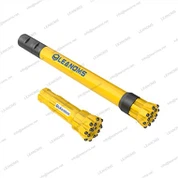
Products Description LEANOMS
Reverse circulation (RC) drill pipe is a critical component of the RC drilling system, which is used extensively in mineral exploration, geotechnical drilling, and water well drilling applications. RC drill pipe is designed to withstand the rigors of drilling in challenging geologic formations, while also facilitating the efficient removal of cuttings from the borehole. Here are some of the key features and applications of RC drill pipe:
Features:
1. Durability: RC drill pipe is manufactured to be extremely durable and withstand the wear and tear of drilling in challenging geologic formations.
Lightweight: RC drill pipe is generally lighter than traditional drill pipe, which helps to reduce the weight and size of the drilling rig.
2. Reverse flow: RC drill pipe is designed to facilitate the reverse circulation of cuttings, which helps to prevent clogging and maintain drilling efficiency.
3. Compatibility: RC drill pipe is compatible with a variety of drilling rigs and can be used in both vertical and angled drilling applications.
Applications:
1. Mineral exploration: RC drilling is a common method used in mineral exploration to collect rock samples from depth. RC drill pipe is critical to the success of this drilling method, as it allows for the efficient removal of cuttings and helps to prevent clogging.
2. Geotechnical drilling: RC drilling is also used in geotechnical drilling applications to collect soil samples and assess subsurface conditions. RC drill pipe is an essential component of this drilling method, as it facilitates efficient removal of cuttings and helps to ensure accurate sample collection.
3. Water well drilling: RC drilling is used in water well drilling applications to create boreholes for the extraction of water. RC drill pipe is necessary for efficient drilling and removal of cuttings, which helps to maintain drilling efficiency and ensure the quality of the water well.
In summary, RC drill pipe is a critical component of the RC drilling system and is essential for efficient and effective drilling in various applications. Its durability, lightweight design, reverse flow capabilities, and compatibility make it an attractive option for many drilling projects.

Specification LEANOMS
Reverse circulation (RC) drilling technology has been in use since the early 1900s, but the development of RC drill pipe specifically can be traced back to the mid-20th century. In the 1950s, the mining industry began experimenting with RC drilling as a faster and more efficient method of drilling exploration boreholes. However, traditional drill rods used in the early days of RC drilling were prone to getting stuck in deep holes or breaking due to the intense vibrations generated by the high-pressure airflow.
To address these issues, engineers began designing specialized drill pipes with thicker walls, improved thread designs, and higher-strength materials such as alloy steel. By the 1970s, RC drill pipe had become a widely accepted standard in the mining industry, and advancements in technology continued to improve its performance and reliability over the years. Today, RC drill pipe is used not only in mining but also in a variety of other industries, including geotechnical drilling, environmental sampling, and water well drilling.