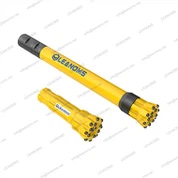
Reverse circulation drilling, often known as RC drilling, is a type of percussion drilling that employs compressed air to effectively and safely drain material shavings out of the drill hole.
Due to the advantages of this approach, RC Drilling has gained popularity in mining exploration and is one of the most often used drilling techniques in Australia and South America.
Reverse circulation drilling's brief history
The development of RC Drilling, which Western Australians are happy to claim as their own, is said to have started in Kalgoorlie in the middle of the 20th century when conventional open-hole drilling proved challenging in soft iron ore and mineral sands.
Technology advanced over time, and in 1972 the first particular RC Drilling pipes were created.
In 1990, the first RC hammer was developed in order to provide clearer cutting samples. High-pressure boosters were introduced to the drilling process in the 1990s to enhance performance and increase penetration rates. Due to the lower mining costs as a consequence, RC Drilling has emerged as one of the most affordable and precise drilling techniques.
How does Reverse Circulation Drilling Work?
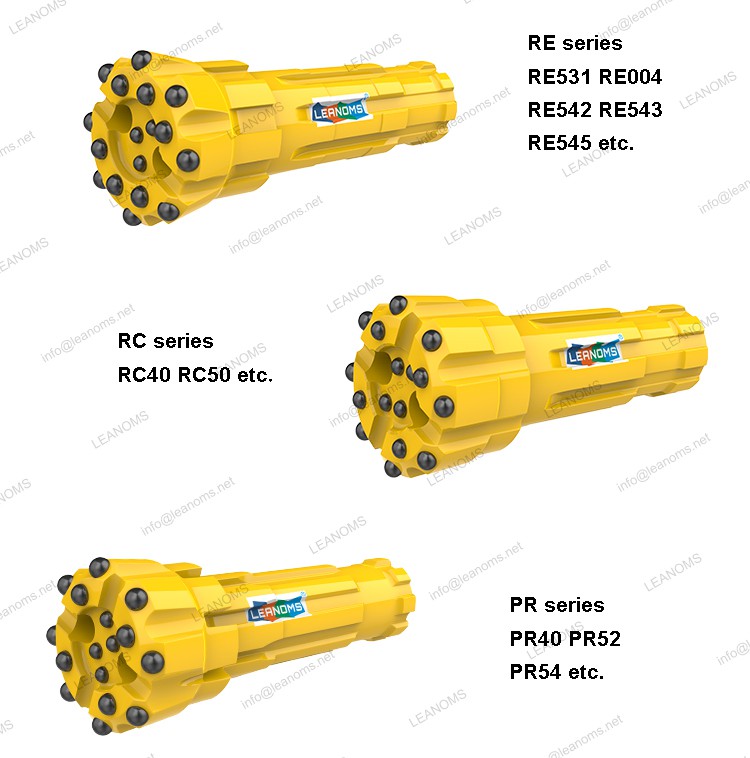
To drill through dirt and hard rock, RC Drilling employs drill bits with spherical, projecting tungsten-carbide buttons. The drill rods themselves have an inner tube and an outer barrel, and they are hollow (similar to air core drilling).
Rapid hits are delivered to the drill stem by a pneumatic reciprocating piston, commonly referred to as a downhole hammer, which then transfers this energy via the drill bit. A revolving mechanism makes sure that the drill bit strikes the fresh rock with each contact while the added concussive force slams the bit into the rock and crushes it.
The sampling staff then gathers the samples, positions them according to the depth of the hole, and layouts them for their customer to log. The material is then delivered to their lab for testing from here.
Since their compressors also push air ahead of the drill bit, drying the rock in the process, RC Drilling often results in dry cuttings.
Water can be introduced during collaring of a new hole to help raise cuttings to the top and prevent dust even though the operation itself is normally dry. When water is injected, a substance called Super Foam is incorporated into the water. The cuttings become more cohesive as a result, improving sample recovery.