
product introduction
::LEANOMS
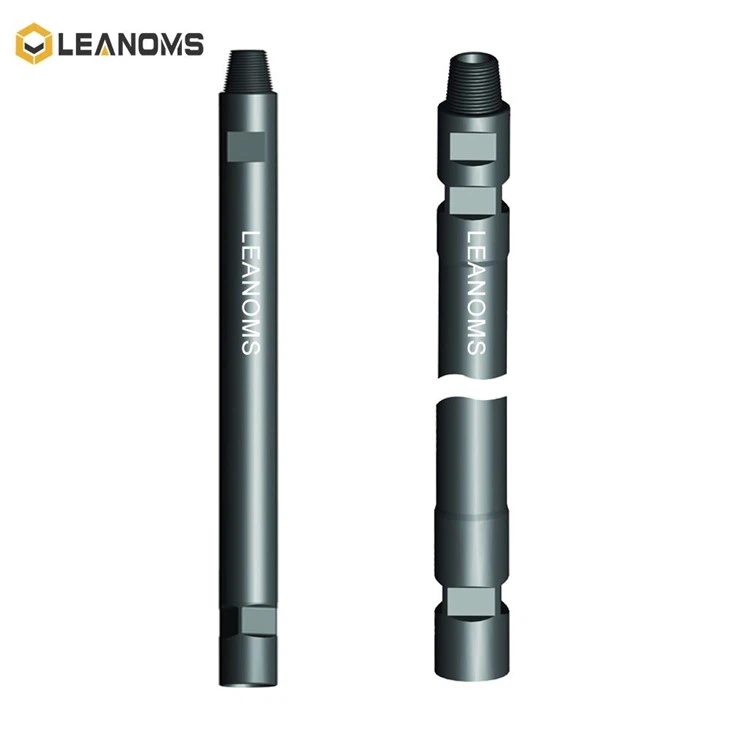
DTH Drill Pipe For Blasting is a specialized tool used in mining, quarrying, and construction industries for creating blastholes. These drill pipes are integral components of DTH drilling systems and are designed to withstand the rigorous demands of blasthole drilling operations.
Process
LEANOMS
The process of drilling a water well involves several steps, and the role of the down-the-hole (DTH) drill pipe is crucial in this process.
Preparation: Before drilling begins, the drilling site is selected based on geological surveys and water availability assessments. Once the site is determined, equipment and materials, including the DTH Drill Pipe For Blasting, are transported to the site.
Setup: The drilling rig is assembled and positioned over the selected drilling location. The DTH Drill Pipe For Blasting, along with the DTH hammer and bit, is attached to the drilling rig's drill string.
Drilling: The drilling process begins with the DTH hammer and bit being lowered into the borehole. The DTH hammer operates by using compressed air or fluids to create a hammering action, which breaks up the rock formation at the bottom of the borehole. The DTH drill pipe serves as a conduit for the compressed air or fluids to reach the DTH hammer and bit.
Penetration: As the DTH hammer and bit penetrate deeper into the ground, the DTH Drill Pipe For Blasting provides structural support and stability to the drilling assembly. It also helps to maintain the alignment of the drilling rig and prevents deviations or deviations in the borehole trajectory.
Cuttings Removal: During drilling, cuttings and debris are generated as the DTH hammer and bit grind away at the rock formation. The DTH drill pipe allows for the circulation of drilling fluids or air, which helps to flush out the cuttings from the borehole and maintain clear and unobstructed drilling progress.
Depth Control: The length of the DTH drill pipe used in the drilling assembly determines the depth of the borehole. Additional sections of drill pipe may be added as needed to reach the desired depth for water extraction.
Completion: Once the desired depth is reached, the DTH hammer and bit are removed from the borehole, and the casing is installed to prevent the borehole from collapsing. The water well is then completed with the installation of screens, pumps, and other equipment for water extraction.
product parameters
LEANOMS
DTH vs Rotary: A Comparative Analysis
The borehole drilling industry relies on efficient and effective drilling methods. Drilling speed, cost-efficiency, depth capabilities, and geological adaptability are vital factors when choosing between DTH and Rotary drilling methods. Below is a comparative analysis structured around these key parameters:
Drilling Speed
The drilling speed is a crucial factor in borehole projects, affecting timelines and overall costs. It is a determinant of how fast a project can be completed.
DTH: In hard rock formations, Down-the-Hole (DTH) drilling typically offers higher drilling speeds. The combination of hammer action with rotation enables rapid penetration. This efficiency is particularly noticeable in projects with tight deadlines or in situations where faster drilling can offset higher upfront costs. Rotary Drilling: Rotary drilling may offer slower speeds in hard rock conditions but is often more efficient in softer terrains. The method employs a simple rotation and drilling fluid circulation process, which is generally less complex and quicker to set up in non-hard rock scenarios.
Cost-Efficiency
Cost-efficiency is another significant consideration in choosing a drilling method, as it impacts the overall budget of a project.
DTH: Down-the-Hole drilling usually requires a higher initial investment due to specialized hammers and drill bits. However, the long-term cost benefits can outweigh these initial expenditures, especially when time is a significant factor in a project. Rotary Drilling: It typically demands a lower initial investment and tends to offer lower operational costs in softer geological conditions. Furthermore, equipment wear and tear are usually less severe than in DTH drilling, contributing to long-term cost efficiency.
Depth Capabilities
The depth to which a drilling method can efficiently operate is essential for many projects, including those that aim for deep reservoirs.
DTH: DTH drilling is effective up to around 1000 meters. Beyond this depth, the hammer action's efficiency diminishes, making it less suitable for extremely deep drilling projects. Rotary Drilling: It excels in deeper operations, often effective at depths exceeding 2500 meters. This makes it an ideal choice for projects that require deep borehole drilling.
Geological Adaptability
The adaptability of a drilling method to various geological conditions can be a deciding factor in its suitability for a particular project.
DTH: DTH drilling is specialized for hard rock formations and often faces challenges when the geological conditions are softer or mixed. The drilling speed and efficiency can significantly decline in these conditions. Rotary Drilling: It is versatile and adaptable to a wide range of geological conditions, including hard, mixed, and soft terrains. This adaptability makes it a more flexible choice for various project requirements.

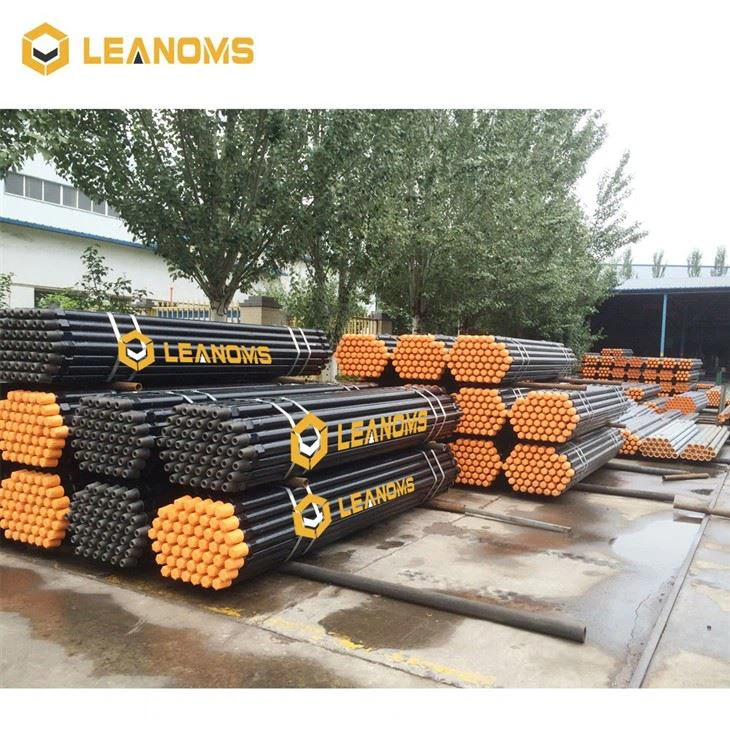
factory
LEANOMS
850 Talented Craftsmen:The Backbone of Our Rock Drilling Equipment Manufacturing
Uncompromising Quality Assurance:
The expertise of our 850 craftsmen forms the cornerstone of our commitment to producing high-quality rock drilling equipment. Every unit that leaves our facility embodies their dedication.
The Value of Fresh Perspective:
Our 200 technicians with 1-5 years of experience bring fresh ideas and a hunger for innovation to the table. Their youthful enthusiasm injects new energy into our manufacturing processes.
The Middle Ground of Mastery:
With 500 technicians having worked for 5-10 years, we find a balance of experience and adaptability. They have mastered their craft while staying open to evolving technologies.
Decades of Dedication:
The 150 technicians with over 10 years of experience represent the bedrock of our operation. Their unwavering dedication to perfection has made them the true stalwarts of our industry.