


Reverse circulation (RC) drilling is a drilling technique commonly used in mineral exploration, water well drilling, and geotechnical testing. This drilling method involves using compressed air to drive a drill bit and drilling fluid down through the drill pipe to the bottom of the hole. The drilling fluid then flows up through the annular space between the drill pipe and the walls of the borehole, carrying rock cuttings with it to the surface.
RC drilling is often preferred over other drilling methods because it can drill faster and more efficiently in hard rock formations. The method also produces higher-quality rock samples with less contamination than other drilling methods, which can be important in mineral exploration.
The name "reverse circulation" refers to the fact that the direction of fluid flow is opposite to that of conventional drilling, where the drilling fluid is pumped down the hole and returns to the surface through the drill pipe. In RC drilling, the fluid and cuttings are transported up through the annular space around the drill pipe and out through a discharge hose at the surface.
Reverse circulation (RC) drilling is a drilling method that is commonly used in mineral exploration and mining industries. In RC drilling, a drill bit is used to create a borehole, and the cuttings from the drilling process are brought to the surface through the center of the drill pipe using compressed air.
Here's how the RC drilling process works:
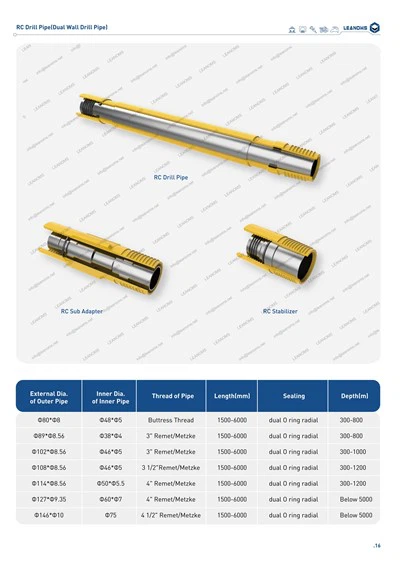
A drill bit is attached to the end of the RC drill pipe, which is made up of several sections of hollow steel pipes that are threaded together.
The drill bit is lowered into the ground and rotated at high speed, creating a borehole.
Compressed air is pumped down the outside of the drill pipe, and through the drill bit. The high pressure of the air creates a vacuum at the bottom of the hole, which pulls the cuttings up and out of the hole and into the drill pipe.
The cuttings are collected in a sample container at the surface, and analyzed to determine the composition of the rock and minerals encountered.
Once the desired depth has been reached, the drill pipe is pulled out of the hole, and the process is repeated for the next hole.
One of the advantages of RC drilling is that it can quickly and efficiently collect large volumes of drill cuttings from deep within the earth. Additionally, the cuttings are typically larger and less fragmented than those produced by other drilling methods, which can make it easier to identify mineralization and geological structures.
Reverse circulation (RC) drilling and down-the-hole (DTH) drilling are two commonly used methods in the mining and exploration industry. While both methods have their own advantages and disadvantages, some advantages of RC drilling compared to DTH drilling are:
Faster drilling speeds: Reverse circulation drilling is faster than DTH drilling because it produces less cuttings and requires fewer trips to remove them. This results in quicker drilling and lower costs per meter drilled.
Greater sample accuracy: Reverse circulation drilling produces higher-quality samples because the cuttings are captured in a sealed cyclone and transported directly to the surface. This ensures minimal sample contamination and accurate geologic data.
Greater depth capacity: Reverse circulation drilling can reach greater depths than DTH drilling due to its higher air pressure and larger diameter drill pipe.
Better environmental control: Reverse circulation drilling produces less dust and noise pollution than DTH drilling, making it more environmentally friendly.
Lower water usage: Reverse circulation drilling uses less water than DTH drilling, which is important in water-scarce regions.
However, it should be noted that each method has its own specific applications and limitations, and the choice between RC and DTH drilling depends on several factors such as the geological conditions, the desired sample quality, and the drilling budget.
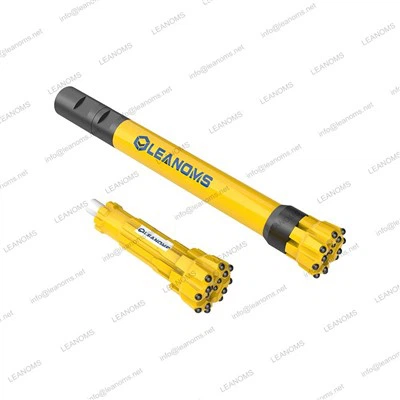
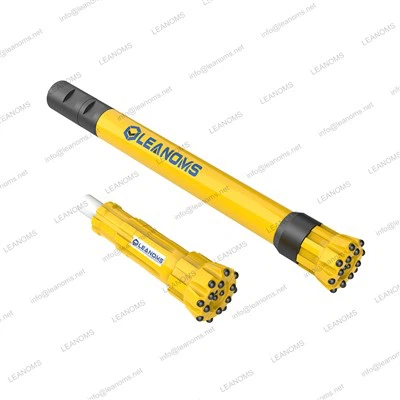
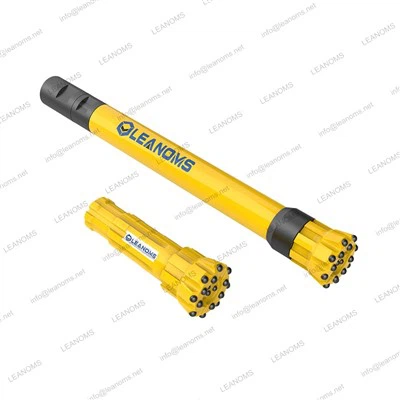
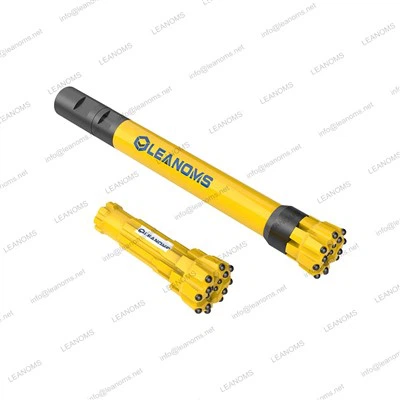
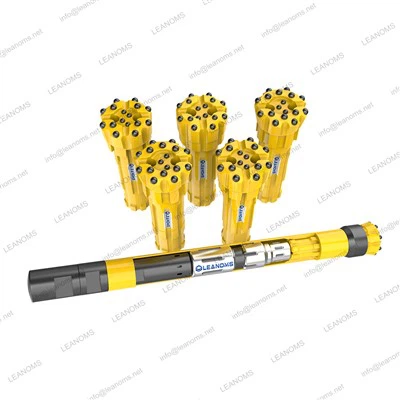
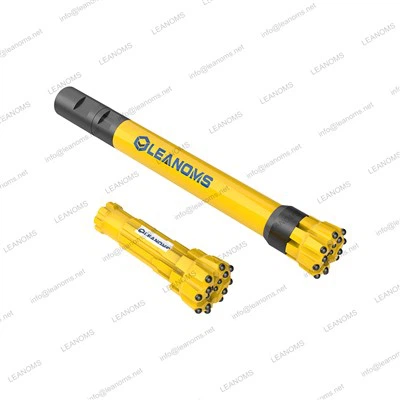
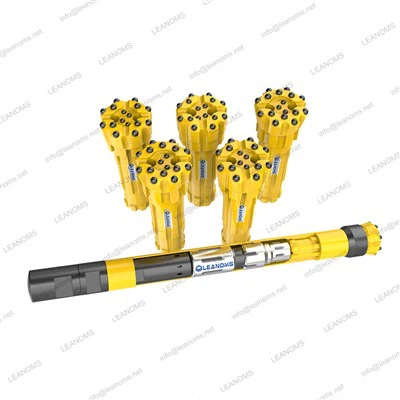
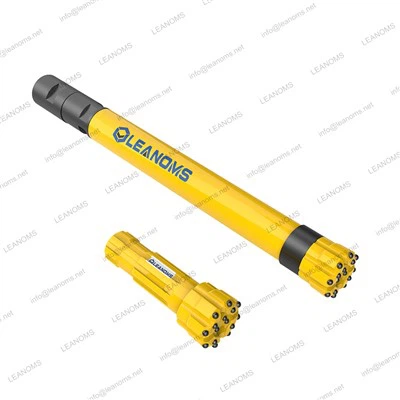
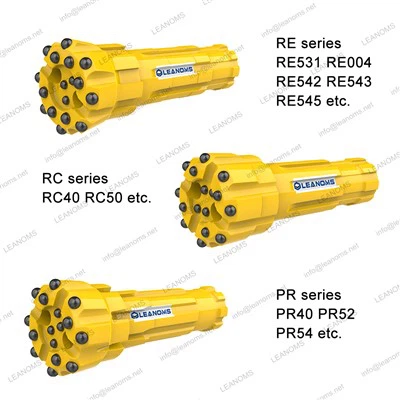
LEANOMS RC Drilling Tools have gained a competitive advantage for their speed, efficiency, and ability to provide accurate samples.
Simplicity and Reliability: Unique effect to complex and leakage formations maintains stability of the wall.
Long-term endurance: Tested successfully that it can be applicated in more difficult conditions for more time.
High drilling efficiency: High drilling efficiency due to strong capability of removing rock dust and flakes.
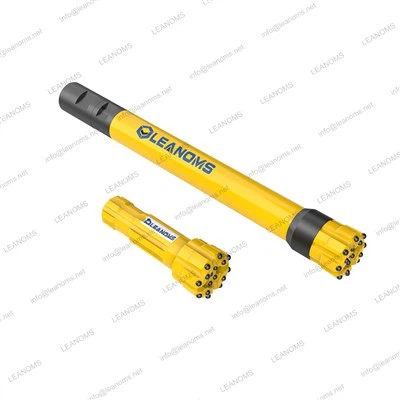
Low energy consumption: LEANOMS RC DTH hammer ensures saving energy consumption.
We're well-known as one of the leading reverse circulation drilling products manufacturers and suppliers in China. Please feel free to buy high quality reverse circulation drilling products at competitive price from our factory. Good service and punctual delivery are available.
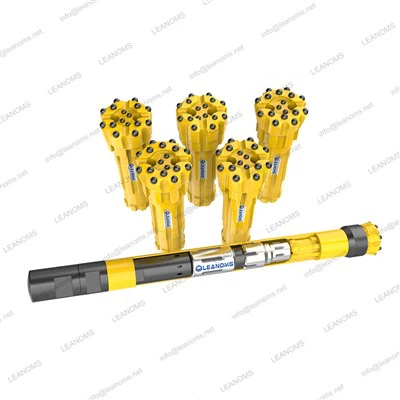
Reverse Circulation Drilling Products, RC4.5 DTH Drilling Hammer and Bit