product introduction
::LEANOMS
Reverse Circulation Bit and Down-The-Hole (DTH) bits are both types of drilling bits used in various drilling applications, but they serve different purposes and have distinct designs to meet the requirements of specific drilling methods.
Operation
LEANOMS
Reverse Circulation Bit and Down-The-Hole (DTH) bits are both types of drilling bits used in various drilling applications, but they serve different purposes and have distinct designs to meet the requirements of specific drilling methods. Here's a comparison between RC bits and DTH bits:
Reverse Circulation Bit:
Drilling Method: RC drilling involves pumping drilling fluid down the drill pipe and collecting cuttings through the center of the drill pipe. The RC bit is designed to efficiently remove cuttings from the bottom of the borehole and transport them to the surface.
Bit Design: Reverse Circulation Bit has a unique design with a wide opening at the center and channels or flutes on the bit face. These features facilitate the efficient flow of cuttings and drilling fluid, allowing the cuttings to be carried up through the inner tube of the RC drill pipe.
Application: Reverse Circulation Bit is primarily used in mineral exploration and grade control drilling. They are suitable for softer formations and are optimized for efficiently collecting high-quality samples by minimizing contamination.
Down-The-Hole (DTH) Bit:
Drilling Method: DTH drilling is a percussion drilling technique where the hammer is located behind the drill bit. Compressed air is used to drive the hammer's piston, which strikes the back of the bit, creating a powerful hammering effect that breaks the rock.
Bit Design: DTH bits have a conventional design with buttons or chisels on the bit face. The bit is subjected to high-impact forces, and the design of the buttons or chisels varies based on the hardness of the rock formation being drilled. DTH bits are available in various designs, such as convex, flat face, and concave, to suit different rock types.
Application: DTH bits are commonly used in mining, quarrying, water well drilling, geothermal drilling, and construction projects. They are effective in hard and abrasive rock formations where high-impact drilling is required to achieve penetration.
Key Differences:
Drilling Method: RC bits are used in reverse circulation drilling, where drilling fluid is used to transport cuttings to the surface through the center of the drill pipe. DTH bits are used in percussion drilling, where a hammer located behind the bit generates impact forces to break the rock.
Cuttings Removal: Reverse Circulation Bit is designed for efficient removal of cuttings in reverse circulation drilling, ensuring high-quality sample collection. DTH bits focus on breaking the rock efficiently and do not involve the circulation of drilling fluid for cuttings removal.
Suitable Formations: RC bits are suitable for softer formations and are used for exploration purposes. DTH bits are effective in hard and abrasive rock formations and are commonly used in mining and construction applications.
In summary, the choice between RC bits and DTH bits depends on the specific drilling method, geological conditions, and the hardness of the rock formation being drilled. Each type of bit is designed to optimize performance based on the drilling technique it is intended for.
Product Parameters
LEANOMS
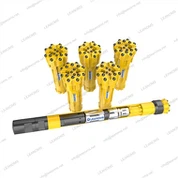
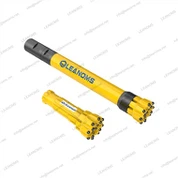
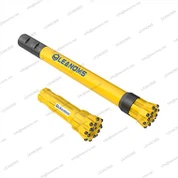
RC Hammer And Bits Model: RE531/RE004/RE542/RE543/RE545/RE547/PR40/PR52/PR52R/PR54/PR54R/RC45/RC50

Certificate
LEANOMS
ISO-Certified Transportation Excellence: As a leading Chinese manufacturer of rock drilling tools, we prioritize the highest standards in every aspect of our business. Our transportation methods reflect this commitment to quality. We are proud to hold ISO9001, ISO14001, and IS45001 certifications, ensuring that our transportation processes are efficient, safe, and environmentally responsible.