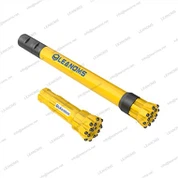
Products Description LEANOMS
Circulation drilling is an advanced drilling technique employed in the field of oil and gas exploration and production. It involves the continuous circulation of drilling fluid, also known as drilling mud, during the drilling process. The drilling mud serves multiple purposes, including cooling the drill bit, removing cuttings from the wellbore, maintaining wellbore stability, and providing hydraulic pressure to counterbalance formation pressure.
In circulation drilling, the drilling mud is pumped down the drill string and exits through the drill bit's nozzles, creating a high-velocity flow that effectively cleans the wellbore. As the mud returns to the surface, it carries the rock cuttings with it, preventing them from settling and causing obstructions. This continuous circulation of the drilling fluid enables efficient drilling operations and reduces the risk of equipment failure and formation damage.
Furthermore, circulation drilling plays a crucial role in well control and kick detection. By monitoring the drilling mud's properties, such as pressure, flow rate, and density, drilling operators can detect any influx of formation fluids (kicks) and take prompt action to control the well's pressure. This helps prevent blowouts and ensures the safety of personnel and equipment.
Overall, circulation drilling has revolutionized the drilling industry by improving efficiency, safety, and wellbore stability. Its ability to maintain constant circulation of drilling mud enables smooth drilling operations, enhances cuttings removal, and facilitates effective well control, making it a vital technique in modern oil and gas exploration and production.

Specification LEANOMS

Circulation drilling offers numerous features and advantages that have made it a widely used technique in the field of oil and gas exploration and production. Here are some of its key features and benefits:
1. Efficient Cuttings Removal: Circulation drilling ensures continuous circulation of drilling mud, which effectively carries the rock cuttings from the wellbore to the surface. This prevents cuttings from settling and accumulating, reducing the risk of wellbore obstructions and improving drilling efficiency.
2. Wellbore Stability: The constant flow of drilling mud in circulation drilling helps maintain wellbore stability by exerting hydraulic pressure on the formation walls. This pressure counteracts the formation pressure, reducing the chances of wellbore collapse or damage.
3. Cooling and Lubrication: The drilling mud circulated in circulation drilling acts as a coolant and lubricant for the drill bit. It helps dissipate heat generated during drilling, preventing excessive wear and prolonging the life of the drilling equipment.
4. Formation Evaluation: Circulation drilling facilitates real-time monitoring of drilling mud properties, such as pressure, flow rate, and density. By analyzing these properties, drilling operators can gather valuable information about the formation being drilled, such as detecting changes in formation pressure, identifying potential hydrocarbon zones, and assessing reservoir characteristics.
5. Well Control and Kick Detection: Continuous circulation of drilling mud enables prompt detection and control of kicks, which are influxes of formation fluids into the wellbore. Monitoring the drilling mud's properties allows operators to detect pressure anomalies and take immediate action to prevent blowouts and maintain well control.
6. Equipment Protection: The use of drilling mud in circulation drilling helps protect the drilling equipment from wear and damage. The mud acts as a barrier between the drill string and the wellbore, reducing friction and minimizing the chances of equipment failure.
7. Safety: Circulation drilling enhances safety by providing an effective means of well control. The continuous circulation of drilling mud, along with real-time monitoring, enables rapid response to any pressure or fluid influxes, ensuring the safety of personnel and equipment on the drilling rig.
8. Cost-Effectiveness: By improving drilling efficiency, minimizing downtime due to wellbore obstructions, and reducing the risk of equipment failure, circulation drilling contributes to cost savings in oil and gas operations. It helps optimize drilling operations and maximize the productivity of the well.
In summary, circulation drilling offers features such as efficient cuttings removal, wellbore stability, cooling and lubrication, formation evaluation, well control, equipment protection, safety, and cost-effectiveness. These advantages have made it a vital technique in the modern oil and gas industry, enabling more efficient and safer drilling operations.