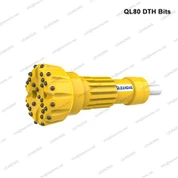
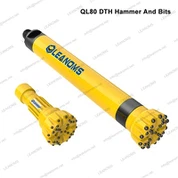
Products Description
LEANOMSWat Is a Rock Drill Hammer?
A rock drill hammer is a high-impact, high-power tool used to drill holes in extremely hard materials such as rock, reinforced concrete, compacted soil layers, and mineral formations.
It is widely used in:
Construction (tunneling, foundation drilling, blasting holes)
Mining & Quarrying (ore extraction, bench drilling)
Geotechnical Engineering (soil investigation, anchoring)
Oil, Gas, and Geothermal (pre-drilling and hard formation penetration)
Water Well Drilling (drilling casing holes and main boreholes)
Geological Sampling (core extraction and rock fracture sampling)
Its power lies in a combination of percussive force, rotational energy, and high-strength drilling bits.
 Key Features and Components of a Rock Drill Hammer
Rock drill hammers vary by brand and application, but most share the following core components:
1. Pneumatic or Hydraulic Power
Pneumatic Rock Drill Hammers
Powered by compressed air
Lightweight and portable
Ideal for mining, tunneling, and general construction
Lower cost and easier maintenance
Hydraulic Rock Drill Hammers
Powered by hydraulic pressure
Higher impact force
Ideal for heavy-duty drilling rigs and deep mining
Better energy efficiency, less air consumption
2. Drill Bit or Chisel
Depending on the task, operators may use:
Button bits (tungsten carbide buttons for hard rock)
Chisel bits (splitting applications)
Cross bits (medium hardness)
DTH hammer bits (deep hole drilling)
Moil points (demolition)
Tungsten carbide is the most common material due to its hardness and extreme abrasion resistance.
3. Percussion Mechanism
The hammer contains a piston that strikes thousands of times per minute.
This rapid impact:
Creates micro-fractures in rock
Transfers energy through the bit
Allows deeper penetration with less effort
4. Operator Control System
Operators can adjust:
Impact frequency
Rotational torque
Bit rotation speed
Flushing air or water flow
This adaptability makes rock drill hammers suitable for multiple rock types-from sandstone to granite to basalt.
5. Noise and Vibration Reduction
Modern hammers include:
Vibration dampening systems
Noise-reducing external casings
Better internal balancing
Ergonomic designs
These improvements reduce operator fatigue and extend tool lifespan.
6. Safety Features
Typical safety considerations include:
Anti-kickback systems
Emergency shutoff valves
Pressure relief devices
Anti-slip handles
PPE requirements (helmet, goggles, gloves, ear protection)
7. Portability and Mobility
From handheld pneumatic hammers to fully hydraulic drilling rigs, rock drill hammers are built for mobility. Construction and mining companies often move between multiple job sites, making portable options essential.
8. Maintenance Requirements
Maintenance includes:
Regular lubrication
Inspection of piston and seals
Cleaning dust and debris
Checking air/water flushing channels
Replacing worn bits
Proper maintenance prevents performance loss and ensures operator safety.
How Rock Drill Hammers Work
Rock drill hammers operate on a percussive + rotary principle.
Step-by-step Process:
Compressed air or hydraulic power activates a piston.
The piston repeatedly strikes the top of the drill bit.
Each impact fractures the rock.
The bit rotates slightly to widen and shape the hole.
Flushing air/water removes cuttings from the hole.
The hammer penetrates deeper with each impact.
This combination allows rock drills to outperform ordinary rotary drills-particularly in hard or compact formations.
Applications of Rock Drill Hammers
1. Mining & Quarrying
Bench drilling
Ore extraction
Production drilling
Primary breaking
2. Construction
Tunneling
Foundation piling
Anchor hole drilling
Road and bridge construction
3. Geological & Geotechnical Work
Rock sampling
Soil investigation
Slope stabilization
4. Water Well Drilling
Casing installation
Pilot hole drilling
5. Oil, Gas & Geothermal Work
Hard formation penetration
Specification
LEANOMS
Technical Parameters Of QL80 DTH Hammers
|
Bit Shank |
QL80 |
|
Hole Range |
Φ195-254mm |
|
Connection Thread |
API 4 1/2" Reg |
|
Working Pressure |
10-25Bar / 1-2.5Mpa |
|
Speed Recommend |
20-45rpm |
|
Pull Force Recommend |
19KN |
|
Length |
1471mm |
|
Weight |
203Kg |
Technical Parameters Of QL80 DTH Bits
|
Diameter |
Gauge Buttons |
Front Buttons |
Weight(KG) |
Part Number |
||||
|
mm |
Inch |
Flat Face |
Convex Face |
Concave Face |
Face Type |
|||
|
203 |
8 |
Φ18*10 |
Φ18*8 |
/ |
Φ16*5 |
Concave Face |
50.1 |
LN-QL80-203CC |
|
216 |
8 1/2 |
Φ18*10 |
Φ18*8 |
/ |
Φ16*6 |
Concave Face |
54.3 |
LN-QL80-216CC |
|
219 |
8 5/8 |
Φ18*10 |
Φ18*8 |
/ |
Φ16*6 |
Concave Face |
54.8 |
LN-QL80-219CC |
|
229 |
9 |
Φ18*12 |
Φ16*12 |
/ |
Φ16*7 |
Concave Face |
56.4 |
LN-QL80-229CC |
|
235 |
9 1/4 |
Φ18*12 |
Φ16*12 |
/ |
Φ16*7 |
Concave Face |
57.4 |
LN-QL80-235CC |
|
245 |
9 5/8 |
Φ19*12 |
Φ16*12 |
/ |
Φ16*8 |
Concave Face |
61.5 |
LN-QL80-245CC |
Advantages of Using a Rock Drill Hammer
High penetration rate
Superior rock-breaking efficiency
Versatility in different geological formations
Reduced operator fatigue with modern design
Better hole quality due to stable percussion
Long lifespan when maintained properly
Expert Insights - What Industry Professionals Say
Industry Trend: Growth in Hydraulic Rock Hammers
According to a 2023 market analysis by the International Drilling Association, hydraulic rock drill hammers saw a 22% increase in global adoption due to:
Rising deep foundation projects
More geothermal installations
Demand for higher drilling efficiency
Expert Opinion
Drilling engineer Michael Turner explains:
"Modern rock drill hammers are not just about power-precision, vibration control, and flushing technology matter just as much. The new generation of hammers significantly reduces fuel consumption and increases hole accuracy."
Case Study: Hard Rock Mining in South Africa
A mining company reported:
38% faster penetration
27% longer bit life
19% reduction in air consumption
after upgrading to a high-quality hammer system.
Scientific Data Supporting Rock Drill Hammer Efficiency
Multiple studies highlight the importance of hammer impact force and bit material.
1. Study on Tungsten Carbide Buttons
Tungsten carbide increases drilling efficiency by up to 45% in granite compared to steel bits.
2. Percussive Frequency Impact
Research from the Journal of Mining Science shows:
Increasing impact frequency from 2000 bpm to 2500 bpm can boost drilling speed by 12–18% depending on rock hardness.
3. Flushing Efficiency
Proper air/water flushing reduces drill bit wear by 30–40%.
These scientific findings confirm why modern rock drilling relies heavily on hammer technology.
Real Operational Cases & User Feedback
Case 1 - Tunneling Project in Indonesia
A contractor drilling through volcanic basalt reported:
Smooth penetration
No bit jamming
Excellent flushing even in fine dust
They specifically noted improved accuracy when using LEANOMS rock drilling tools.
Case 2 - Quarry Bench Drilling in Turkey
Operators shared:
"The hammer runs cooler and holds pressure longer. The carbide buttons lasted almost 20% longer."
Case 3 - Water Well Drilling in Texas
A drilling team installed hundreds of 6-inch wells in limestone with:
Faster hole cleaning
Reduced vibration
Perfect hole straightness
User Feedback on LEANOMS Rock Drill Hammers
Customers consistently highlight:
2–5x faster drilling
Longer bit life
Lower fuel consumption
Cleaner and straighter boreholes
Lower total drilling cost
FAQ - Google's Top Searched Questions About Rock Drill Hammers
1. What is a rock drill hammer used for?
It is used for drilling holes in hard rock, concrete, and compact materials for mining, construction, geotechnical, and water well drilling applications.
2. What is the difference between a rock drill and a DTH hammer?
A rock drill is a general term.
A DTH hammer is a specific type of rock drill used for deep, straight holes with high impact efficiency.
3. How long does a rock drill hammer last?
With proper maintenance, a high-quality hammer can last hundreds of drilling hours, depending on rock hardness and impact frequency.
4. What type of bit is best for rock drilling?
Tungsten carbide button bits are the most durable and widely used for hard formation drilling.
5. How do you maintain a rock drill hammer?
Lubricate frequently
Check seals and pistons
Ensure flushing holes are clear
Replace worn bits promptly
Conclusion - Why a Rock Drill Hammer Is Essential
The question we began with-"Can this tool break through basalt?"-has a clear answer:
👉 Yes-when you use a properly engineered rock drill hammer designed for high-impact penetration.
Rock drill hammers remain indispensable across mining, construction, tunneling, and geotechnical engineering. Their combination of percussive power, drilling precision, durability, and adaptability makes them one of the most reliable tools on any project site.
With advanced options from industry leaders like LEANOMS, operators can achieve:
Faster penetration
Better hole quality
Lower operational costs
Longer tool life