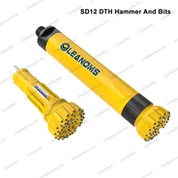
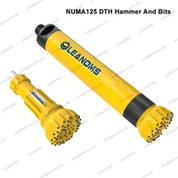
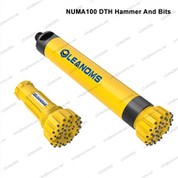
Products Description LEANOMS
The DTH (Down-The-Hole) Thread Hammer, also known as a DTH hammer or DTH drill bit, is a specialized tool used in the drilling industry for percussive drilling operations. It is specifically designed for drilling holes in hard rock formations.
The DTH thread hammer consists of the following components:
Drill Bit: The drill bit is the cutting element at the bottom of the DTH hammer. It is made of hard materials such as tungsten carbide or diamond inserts to withstand the high impact forces and abrasion encountered during drilling.
Hammer Body: The hammer body houses the internal components of the DTH hammer. It is typically made of high-quality steel to ensure strength and durability.
Internal Piston: The internal piston, also known as the striker or driver, is driven by compressed air or other suitable fluids. It moves rapidly inside the hammer body to deliver powerful blows to the drill bit, allowing for effective rock penetration.
Air Distributor: The air distributor directs the compressed air or fluid from the surface into the hammer body. It ensures the proper operation of the internal piston and controls the flushing of cuttings from the drilling hole.
Thread Connection: The DTH thread hammer is designed with specific thread connections on the top end to connect to the drilling string. The thread connection ensures a secure and tight fit between the DTH hammer and the drilling rig.
The working principle of the DTH thread hammer involves the rapid reciprocating motion of the internal piston, which transfers energy to the drill bit. As the compressed air or fluid forces the piston downwards, it strikes the back end of the drill bit, generating high-frequency impacts. These impacts break the rock formation, and the drilling cuttings are expelled from the hole through the annular space between the drill string and the hole wall.
DTH thread hammers are widely used in various drilling applications, including mining, quarrying, water well drilling, geotechnical investigations, and construction projects. They are known for their efficiency in penetrating hard rock formations and their ability to maintain straight and accurate holes. Different sizes and designs of DTH thread hammers are available to accommodate varying drilling requirements.
The design of a Down-The-Hole (DTH) threaded hammer involves several key components and considerations to ensure optimal performance and durability. Here are the essential design aspects of a DTH thread hammer:
Body: The main body of the DTH hammer is typically made of high-quality alloy steel or other durable materials. It is designed to withstand high impact forces and drilling pressures during operation.
Shank: The shank of the DTH hammer is responsible for connecting the hammer to the drill string. It features threaded connections that allow for easy assembly and disassembly with the drilling rig.
Piston: The piston is a crucial component of the DTH hammer that generates the percussive energy for drilling. It moves back and forth inside the hammer body, striking the drill bit to break the rock formation.
Valve System: The DTH hammer incorporates a valve system that controls the flow of compressed air or other drilling fluids within the hammer. This system regulates the energy transfer from the piston to the drill bit and facilitates efficient drilling.
 Bit Retention Mechanism: The DTH hammer includes a bit retention mechanism to securely hold the drill bit in place during drilling operations. Various mechanisms, such as circlips or retaining pins, can be used to ensure proper bit retention.
Air Circulation: Effective air circulation is essential to maintain consistent drilling performance and prevent heat buildup in the DTH hammer. The design includes air passages and channels that allow for the efficient flow of compressed air or drilling fluids to cool the hammer during operation.
Thread Design: The thread design of the DTH hammer is crucial for proper connection and compatibility with the drill string. It ensures a secure and leak-free connection while allowing for easy assembly and disassembly.
Wear Protection: The DTH hammer may incorporate wear-resistant materials or coatings in critical areas to enhance durability and extend the hammer's lifespan. This includes wear pads, hard-facing, or specialized coatings to withstand the abrasive drilling environment.
Weight Distribution: The design of the DTH hammer takes into account proper weight distribution to optimize drilling efficiency and minimize vibrations. Balancing the weight distribution helps to reduce wear on the hammer and other drilling components.
Compatibility: The DTH hammer design considers compatibility with various drilling rigs, drill bits, and drilling conditions. It allows for customization and adaptation to different drilling applications and rock formations.
Specification LEANOMS
Technical Parameters Of DHD360 COP64 DTH Bits
|
|||||||||||||||||||||||||||||||||||||||||||||||||||||||