Products Description
LEANOMS
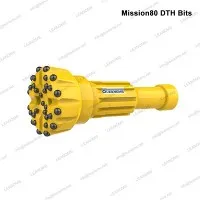
Used Drill Bits are specialized tools used in drilling operations, particularly in the mining, construction, and oil and gas industries. These bits are designed to be attached to a DTH hammer, which is a drilling device that delivers powerful, high-frequency blows to the bit to break through rock or other hard materials.
production Advantages
LEANOMS
Used Drill Bits are essential tools used in the mining, construction, and drilling industries to create holes in hard rock and other materials. They have a rich history that spans several decades, evolving from early rudimentary designs to highly specialized and efficient tools. Here's a brief history of Used Drill Bits:
Early Developments:
The history of DTH drilling can be traced back to the early 20th century when manual drilling methods were prevalent. These methods involved striking the rock with a chisel-like tool called a "jumper" and then manually removing the debris.

Early attempts to mechanize drilling involved attaching drill bits to steam-powered or compressed air-powered machines. However, these early designs were not highly efficient.
Invention of the ModernUsed Drill Bits:
The modern Used Drill Bits as we know it today was invented in the 1950s by the Swedish engineer and inventor Göran Fredrik Göransson, who founded the company Atlas Copco.
Göransson's design involved a rotating drill bit that could be powered by compressed air. This design allowed for more efficient drilling and the creation of deeper and larger boreholes.
Advancements in Design and Materials:
Over the years, Used Drill Bits technology has seen significant advancements in design and materials. Tungsten carbide, a hard and durable material, began to replace traditional steel for the cutting inserts on the drill bits.
Improved sealing mechanisms were developed to prevent air leakage and increase drilling efficiency.
Expansion into Various Industries:
DTH drilling became widely adopted in the mining and quarrying industries due to its ability to efficiently drill through hard rock and ore bodies.
The construction industry also embraced DTH drilling for tasks such as foundation drilling, pile driving, and rock blasting.
Specification
LEANOMS

Silica/dust hazard
LEANOMS
WARNING:
Exposure to crystalline silica (sometimes called “silica dust”) as a result of rock drilling may cause silicosis (a serious lung disease), silicosis related illnesses, cancer, or death.
Silica is a major component of rock, sand, and mineral ores. To reduce silica exposure:
• Use proper engineering controls to reduce the amount of silica in the air and the
build-up of dust on equipment and surfaces. Examples of such controls include exhaust ventilation and dust collection systems, water sprays, and wet drilling. Make sure that controls are properly installed and maintained;
• Wear, maintain, and correctly use approved particulate respirators when engineering controls alone are not adequate to reduce exposure below permissible levels;
• Participate in air monitoring, medical exams, and training programs offered by your employer and when required by law;
• Wear washable or disposable protective clothes at the worksite; shower and change into clean clothes before leaving the worksite to reduce exposure of silica to yourself, other persons, cars, homes, and other areas;
• Work with your employer to reduce silica exposure at your worksite.
Some dusts, vapors, or mists created during rock drilling may contain materials or chemicals known to the state of California to cause cancer and birth defects or other reproductive harm.