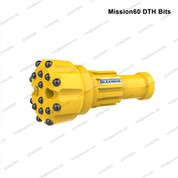
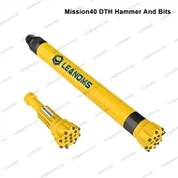
Products Description LEANOMS
Selecting the appropriate DTH (Down-The-Hole) drill bit size is crucial for achieving efficient and effective drilling operations. Here are some factors to consider when choosing DTH drill bit sizes:
1. Hole Diameter Requirements: The desired hole diameter for the drilling project is a primary consideration. It is important to select a drill bit size that matches the required hole diameter to ensure proper hole dimensions and achieve the desired drilling objectives.
2. Rock Formation Characteristics: Different rock formations have varying hardness levels and drilling characteristics. Harder formations may require larger drill bit sizes with more aggressive cutting structures, while softer formations may be drilled more effectively with smaller drill bit sizes.
3. Drilling Equipment Capacity: The capacity of the drilling equipment, particularly the DTH hammer, plays a significant role in determining the suitable drill bit size. The equipment should be capable of accommodating and effectively driving the selected drill bit size.
4. Drilling Objectives: Consider the specific goals of the drilling project. For example, if the objective is to sample or retrieve core samples, larger drill bit sizes may be required. If the goal is to create blast holes, the size may depend on the desired explosive charge and fragmentation.
5. Drilling Depth: The depth of the borehole influences the selection of drill bit sizes. Longer drilling depths may require larger drill bit sizes to ensure sufficient hole stability and effective drilling progress.
6. Operational Considerations: Factors such as drilling speed, equipment maneuverability, and operator experience should also be taken into account. Smaller drill bit sizes are generally associated with higher drilling speeds, while larger sizes may offer greater stability but at a slower drilling rate.
It is crucial to consult with experienced drilling professionals or manufacturers to determine the most suitable drill bit size for a specific application. They can provide guidance based on the project requirements, rock formations, and equipment specifications. Additionally, conducting pilot tests or field trials with different drill bit sizes can help assess their performance and make informed decisions on the optimal size for the drilling project.

Specification LEANOMS

DTH (Down-The-Hole) drill bit sizes refer to the range of available diameters for these specialized drilling tools. DTH drill bits are commonly used in various industries such as mining, construction, and geotechnical drilling.
The selection of the appropriate DTH drill bit size is crucial for achieving efficient and accurate drilling. The sizes typically range from smaller diameters, such as 3 inches (76 mm), to larger diameters, such as 24 inches (610 mm) or more, depending on the specific application and drilling requirements.
Choosing the right drill bit size depends on factors such as the desired hole diameter, the characteristics of the rock formation, the drilling equipment capacity, the drilling objectives, the drilling depth, and operational considerations. It is important to consult with experienced professionals or manufacturers to determine the most suitable drill bit size for a particular project.
Selecting the proper DTH drill bit size ensures optimal drilling performance, hole quality, and productivity. It is crucial to consider these factors to achieve successful drilling operations and meet project requirements efficiently.