


Particularly in mining, building, and geothermal energy development projects, hole hammer drilling technology is a useful drilling technique extensively used in the engineering sector. This technique guarantees the precision and verticality of the drilling by depending on the direct impact of the pneumatic hammer head, which rapidly destroys hard rocks by high-frequency impact, thus enhancing the drilling speed. Due to its great application and excellent drilling efficiency, hole hammer drilling has become a crucial instrument in current engineering projects as geological conditions becoming more complicated.
1. The working idea of hole hammer drilling technique
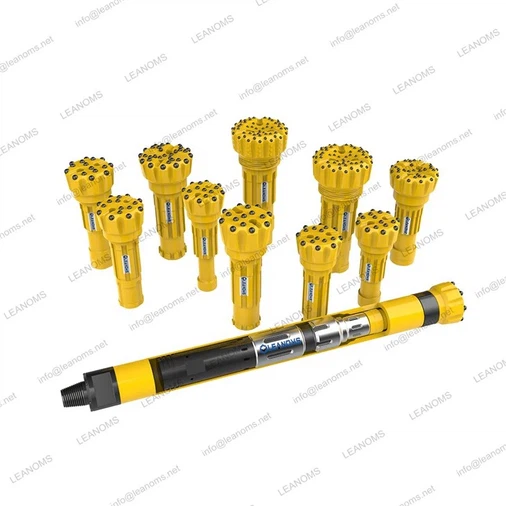
Using the pneumatic hammer head to directly operate on the drill bit and rapidly shatter the rock by producing a powerful impact force is the fundamental idea of hole hammer drilling technology. The drill specifically sends pressurized air to the drill rod, which forces the pneumatic hammer head at the bottom of the hole to hit at great speed. Usually, this impact frequency falls in hundreds of times per minute. The hammer head and drill bit cooperate with rotating action to shatter the rock and discharge the rock cuttings via the drill hole. DTH technology sets the pneumatic hammer head at the bottom of the hole to immediately transfer power, unlike conventional drilling techniques which depend on lengthy drill rods to impart impact force. Higher crushing efficiency results from this structural design reducing the energy waste caused by the drill rod's length enabling the impact force to operate directly on the rock.
Modern DTH drilling rigs also have a range of sophisticated devices, like control systems that automatically modify drilling pressure and speed, thereby enhancing drilling efficiency. These technologies allow the drilling rig's operating mode to be changed based on various geological circumstances, therefore guaranteeing a consistent drilling pace in difficult rock formations. Furthermore, the functioning of the whole set of equipment depends on the quality and stability of compressed air, particularly in deep well drilling when a higher-power air compressor is needed to provide a constant supply of air pressure.
2. Benefits of hole hammer drilling
successful drilling
The great efficiency of hole hammer drilling technology is one of its main benefits, particularly in hard rock formations where conventional drilling techniques can have poor energy transfer efficiency, thereby producing sluggish drilling speed. By directly affecting the impact force at the bottom of the hole, the DTH drilling equipment may rapidly crush rocks, thereby decreasing drilling time and lowering construction expenses. In mining and major infrastructure projects especially, this great efficiency is crucial as it drastically shortens the whole project duration.
High precision in hole diameter
DTH hammers practically never cause collapse or deformation of the hole wall during drilling as the impact force is focused at the bottom of the hole and their extremely smooth contact surface with the rock makes perfect sense. This guarantees the constancy of the drilled hole's size and is appropriate for drilling situations requiring great accuracy, like geological investigation, auxiliary holes in tunnel construction, and building foundation pile engineering.
broad spectrum of uses
Whether it's strong granite, thick basalt, or soft rock strata loaded with a lot of gravel, DTH technology can handle practically every geological situation. DTH technology is thus a necessary instrument in mining, energy development and infrastructure building. Particularly crucial for engineering projects are technological tools that can accommodate a range of complicated geology, particularly those spanning many geological regions.
Minine wellbore deviation
Due to the large length of the drill rod in other drilling methods, deviation is prone to develop after the drilling depth rises, thus deviating the drilling from the goal. DTH technology, however, reduces the energy transfer route such that the impact force acts directly on the bottom of the borehole, thereby lowering the probability of borehole deviation and therefore enhancing the vertical accuracy of drilling. In deep hole drilling especially, this benefit is rather clear.
3. situations of use for hole hammer drilling
Mine
As the prime option for blast hole drilling in mining, hole hammer drilling technology may be rather important for rock crushing activities. To more effectively extract ores, mines sometimes must dig suitable-depth and large-diameter blast holes in hard rock formations. While hole hammer drilling may drill into hard rock more rapidly by direct impact crushing, with conventional drilling techniques addressing hard rock formations the drilling pace is sluggish and the hole diameter is challenging to maintain uniformity. This method guarantees the verticality of the borehole and the precision of the hole diameter, therefore it helps the blasting job in the mine to be more effective and lower the deviation produced during the blasting operation. Furthermore helping to lower ore loss and increase recovery rate is high-precision drilling design.
Engineering Construction
In the building industry, particularly with regard to large-scale infrastructure projects and subterranean construction, hole hammer drilling is extensively used in projects involving foundation strengthening and pile driving. Its unique ability to pass many layers, particularly fit for high-rise construction pile foundations, To guarantee the integrity of the foundation, establishing foundation piles calls for exact hole diameter and depth; hole hammer drilling may satisfy this need and prevent issues such wellbore deviation or collapse during pile foundation building. Particularly on building sites with rather hard rocks, hole hammer drilling may rapidly drill and finish the development of pile foundation channels, thus enhancing construction efficiency.
Water Well drilling
Another significant application sector of hole hammer drilling is water well drilling. Particularly in search of deep underground water sources, hole hammer drilling technique may rapidly pass across many geological formations to provide easy access to water layers. Because the impact force works directly on the bottom of the hole and may preserve the verticality of the hole, hole hammer drilling will not generate hole deviation during drilling unlike conventional rotary drilling techniques. Hammer drilling not only speeds up the drilling process but also lessens the bore's obstruction resulting from rock collapse, therefore enhancing the construction quality and the well's service lifetime.
Development using geothermal energy
Hammer drilling has shown special benefits in geothermal well drilling as renewable energy production advances constantly. Usually, geothermal energy development calls for drilling deep wells to access subterranean heat energy; hammer drilling may rapidly drill to the desired depth by efficiently penetrating the hard bedrock layer. Hammer drilling guarantees the stability and efficiency of geothermal wells, which sometimes call for lengthy working hours, therefore ensuring their longevity and safety. Furthermore, hammer drilling guarantees the efficiency and production capability of geothermal wells and helps to minimize the wellbore deflection issue.

4. Hammer drilling technology's difficulties
high maintenance needs for machinery
Particularly the pneumatic hammer head and drill bit, hammer drilling equipment would suffer a great wear rate under high-speed impact. Particularly in high-intensity continuous operation, the equipment would lose quicker and the maintenance expenses will be more. Regular equipment maintenance and components replacement are required if one wants to guarantee the drilling efficiency throughout the building process. Furthermore, under difficult geological conditions, the degree of equipment wear and tear might be more significant, thereby adding greater complexity and frequency of maintenance tasks. Thus, a major concern in the sector now is how to increase the service lifetime of equipment and lower maintenance frequency by means of technical advancement.
Requirements for a system of compressed air
The major power source for hole hammer drilling is compressed air, so the performance of the air compressor directly determines the drilling efficiency. Particularly in deep hole drilling, steady and high-power compressed air supply is needed to preserve hammer impact force. The impact power of the hammer will be reduced in cases of inadequate air supply or low compressor performance, thus directly influencing the drilling speed and building progress. High-power compressors are thus often needed in project building as they guarantees the continuous and steady running of the compressed air supply system. This subtly raises the building expenses, particularly for big projects and deep wells, where reliance on air compressors is more noticeable.
Vibration and noise issues
The operating method of hole hammer drilling is often accompanied by significant noise and vibration as it depends on high-speed impact and the usage of compressed air, which has a certain detrimental effect on the construction environment and nearby places. Noise issues could create objections from neighbors when building close to homes or businesses, and even call for more sound insulating techniques. Furthermore taken into consideration are vibration problems, particularly in places sensitive to subterranean infrastructure where high vibrations might compromise nearby buildings. Thus, a significant focus of future technology optimization is how to lower noise and vibration during hole hammer drilling by means of technical innovation.
5. How may hole hammer drilling technique be improved?
Select a drill bit appropriate for geological conditions
Various geological settings call for diverse drill bit needs. The correct drill bit will greatly increase drilling efficiency and equipment lifetime. To lower the wear rate of the drill bit and lengthen its service life under hard rock conditions, for instance, you might decide to utilize alloy drill bits with more wear resistance. You may choose a smaller drill bit in soft rock formations to cut pointless energy usage. Furthermore customizing the drill bit will help to guarantee the optimum drilling impact in addition to geological structure and drilling depth.
Increase the effectiveness of the compressed air system
Compressed air is the power source of the whole system in hole hammer drilling technology, so it is essential to increase the efficiency of the system. By use of a steady and effective air compressor, one may guarantee that the hammer head constantly preserves enough impact power and minimizes sporadic downtime while drilling. Furthermore taken into consideration are energy-saving compressors, which not only lower energy consumption but also help building economics. It is advised to equip spare air compressors for large-scale building projects in order to avoid the primary engine from failing and thus influencing the course of the construction.
enhance the intelligent equipment control
By use of sophisticated control systems, hole hammer drilling technology may increase construction efficiency as science and technology grow. Automated drilling pressure management and speed control, for instance, may dynamically change the operating condition of the drill depending on real-time geological feedback data, prevent too much equipment wear, and increase its service life. By use of clever monitoring devices, the deviation of the borehole may also be watched in real time and adjusted to guarantee the verticality of the borehole. Furthermore, the intelligent technology may enable building workers to choose the optimal drilling route and improve their analysis of the rock construction.

Applied extensively in mining, building foundation construction, water well drilling, and geothermal energy development, hole hammer drilling technology is a fast and precise drilling technique. Through the pneumatic hammer head, this technique immediately works at the bottom of the hole to produce a high impact force breaking the rock. Its features include minimized wellbore deflection, exact aperture, wide application range, and effective drilling.
The advancement of intelligent control and environmental protection technology is helping to solve the pertinent issues even if hammer drilling presents difficulties such equipment maintenance, compressed air needs, and noise and vibration. Hammer drilling technology will advance in a more intelligent, environmentally friendly, and efficient direction in the future, thereby enhancing building quality and encouraging its broad implementation in world projects.
