Company Profile
LEANOMS
LEANOMS Group engineering team is unwavering in its commitment to providing continuous updates and develop
innovations for the entire drilling product range.
To achieve this, LEANOMS Group has invested in R&D facilities and boasts an engineering team comprising
experienced leaders and young talents. LEANOMS has gradually stepped to higher manufacturing achievements.
LEANOMS Customer Support Center also has engineering teams with feedback from the field, ensuring continuous improvement and innovation.
Product Introduction
LEANOMS
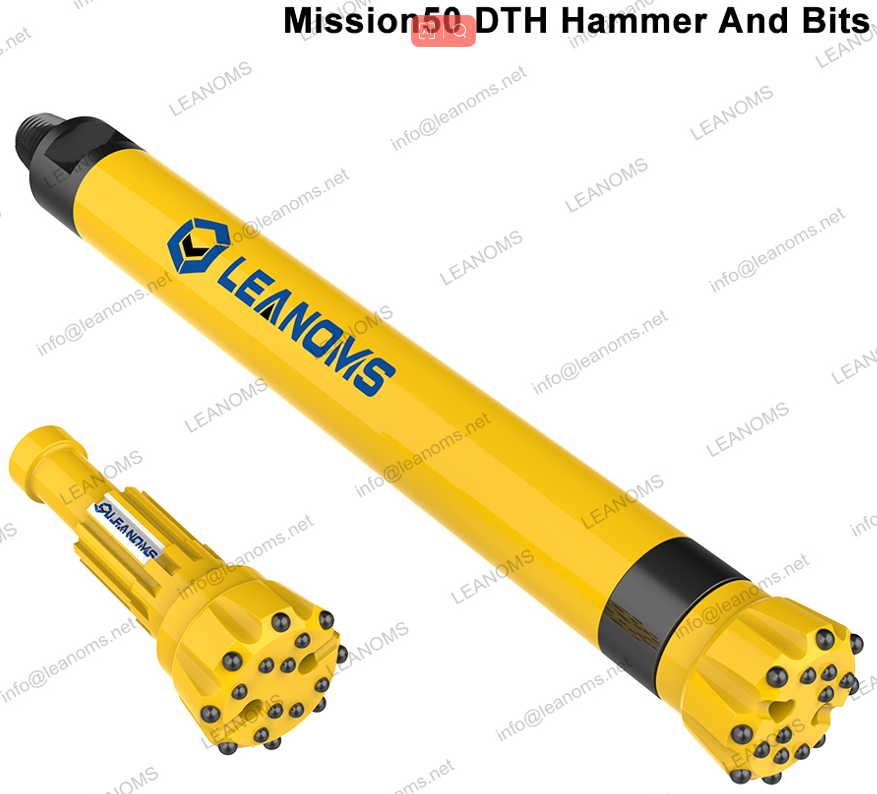
Hole hammer drilling is a specialized drilling tool commonly used in the mining, construction, and geotechnical industries for drilling holes in various types of rock and earth materials. It is a critical component of drilling rigs and equipment used for tasks such as mineral exploration, blast hole drilling, water well drilling, foundation drilling, and more. hole hammer drilling is designed to provide powerful and efficient rock penetration, making it an indispensable tool in a wide range of applications.
LEANOMS offers one of the most complete lines of down the hole hammers, drills and downhole bits ranging from 3.5” – 48” (89mm – 1219mm) which are designed for peak performance in all rock drilling applications including but not limited to; foundation & geotechnical drilling, blasthole drilling in quarries & mines, waterwell & geothermal boreholes, oil & gas underbalanced drilling, horizontal directional drilling, and utility transmission & distribution rock sockets.
Projectile hazard
LEANOMS
WARNING:
During rock drilling, splinters or other particles of rock may become projec-tiles and cause bodily injury by striking the drilling operator or other persons. Use approved personal protective equipment, including impact resistant eye protection, to reduce the risk of being injured by a projectile.
Noise hazard
WARNING:
High sound levels may cause permanent hearing loss. Use hearing protection in accordance with occupational health and safety regulations.
Packing
LEANOMS
Select the Right Wooden Boxes:
Choose wooden boxes that are strong and sturdy enough to withstand the weight and protect the drill bits from damage during handling and shipping. The boxes should be of an appropriate size to accommodate the drill bits comfortably.
Prepare the Boxes:
Inspect the wooden boxes for any defects, such as loose nails or cracks. Repair any issues, if necessary. Ensure that the inside of the box is clean and free of splinters.
Prepare the DTH Drill Bits:
Check the DTH drill bits for any damage or defects. Ensure that they are clean and free from debris or oil. If needed, you can coat the drill bits with a thin layer of rust inhibitor to prevent corrosion during storage.
Cushioning Material:
Line the bottom of the wooden box with foam or cushioning material. This will provide additional protection to the drill bits and prevent them from shifting during transit.
Arrangement of Drill Bits:
Place the DTH drill bits carefully inside the wooden box. Ensure that they are arranged in a way that minimizes contact with each other to prevent damage or chipping. You may want to separate them using foam dividers or individual slots.
Secure the Drill Bits:
Once the drill bits are in place, secure them by placing foam or cushioning material on top of them. This will prevent movement and cushion against any shocks or impacts.
Close and Seal the Box:
Close the wooden box and seal it securely using nails, screws, or packing tape. Make sure the box is tightly sealed to prevent any moisture or contaminants from entering.
Labeling:
Label the wooden box with important information such as the contents (DTH drill bits), quantity, weight, and any handling instructions. Use markers or labels that are waterproof and easy to read.
Packing for Shipping:
If you plan to ship the wooden boxes, stack and secure them on pallets. Use strapping or shrink wrap to secure the boxes to the pallets. Ensure that the boxes are stable and won't shift during transit.