Products Description
LEANOMS

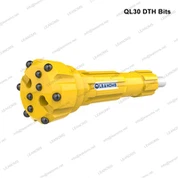
A "110 DTH bit" refers to a drilling bit used in the mining and construction industry. DTH stands for "Down-The-Hole," which is a drilling method where a hammer-like tool is used to create a hole by repeatedly impacting the drill bit into the rock or other materials.
The "110" in "110 DTH bit" represents the diameter of the drill bit. It indicates that the bit has a diameter of 110 millimeters, meaning it can create a hole with a diameter of 110mm.
DTH bits are commonly used in large-scale drilling operations, such as mining, quarrying, and construction projects, where the drilling needs to be efficient and precise. These bits are designed to withstand the rigors of rock drilling and are often used in combination with DTH hammers and drilling rigs to penetrate hard surfaces.
A 110mm DTH (Down-the-Hole) bit refers to a drilling tool used in the mining and construction industries for drilling large-diameter holes in hard rock formations. Here are some common features and specifications of a 110 DTH bit:
Diameter: The bit has a diameter of 110mm, which means it can create holes with a diameter of 110mm.
DTH System: It is designed for use with a Down-the-Hole drilling system, where compressed air is used to power the drilling process.
Drill Bit Design: The bit typically has a button or spherical-shaped carbide inserts on its face. These inserts are made of hard materials like tungsten carbide and are strategically placed to withstand the high impact and abrasion encountered during drilling.
Drilling Efficiency: The design of the bit ensures efficient energy transfer from the hammer to the bit, resulting in faster drilling rates and reduced fuel consumption.
Shank Type: The shank of the DTH bit is usually designed to match the specific drilling rig or hammer being used. Common shank types include the API REG (Regular), API IF (Internal Flush), and others.
Drilling Application: A 110 DTH bit is suitable for drilling in hard rock formations, including granite, basalt, limestone, and other abrasive materials.
Durability: The bit is manufactured using high-quality materials and advanced heat treatment processes to ensure durability and resistance to wear, extending the lifespan of the bit.
Water Flushing: Some DTH bits have water holes or flushing ports to facilitate the flushing of drilling cuttings and cooling the bit during drilling operations.
Compatibility: The 110 DTH bit is compatible with drilling rigs and hammers that support a 110mm hole size and matching shank type.
It's important to note that specific manufacturers may have slight variations in the design and features of their 110 DTH bits. Therefore, it's always advisable to refer to the manufacturer's specifications for detailed information about a particular product.
A 110 DTH (Down-The-Hole) bit, also known as a drilling bit, is typically used in various scenarios where deep drilling is required. Here are some common scenarios where a 110 DTH bit can be used:
Mineral Exploration: The 110 DTH bit is often employed in mineral exploration projects to drill into the earth's crust and extract core samples for analysis. It can be used to explore various minerals such as gold, copper, iron ore, etc.
Water Well Drilling: When drilling water wells, the 110 DTH bit is commonly used to penetrate through different layers of soil and rock formations. It enables the creation of boreholes for accessing underground water sources.
Geotechnical Investigations: Geotechnical investigations involve studying the soil and rock properties of a particular site for construction purposes. The 110 DTH bit is utilized to collect samples and gather data about the subsurface conditions, which helps engineers in designing foundations and structures.
Oil and Gas Exploration: In the oil and gas industry, the 110 DTH bit plays a vital role in drilling wells for exploration and production purposes. It is used to reach oil and gas reservoirs located deep underground, allowing extraction of these valuable resources.
Construction and Quarrying: Construction projects often require drilling for various purposes, such as foundation piling, tunneling, and blasting in quarries. The 110 DTH bit is employed to create holes for these activities, enabling the construction of structures and extraction of raw materials.
Civil Engineering Projects: Civil engineering projects like dam construction, bridge foundations, and underground infrastructure often involve drilling through challenging terrains. The 110 DTH bit is used to penetrate hard rock or consolidated soil to create stable and secure foundations.
Environmental Sampling: Environmental studies and site assessments may require drilling to collect samples for analyzing soil and groundwater contamination. The 110 DTH bit facilitates the collection of subsurface samples, aiding in environmental monitoring and remediation.
These are just a few examples of scenarios where a 110 DTH bit can be utilized. The bit's size and capabilities make it suitable for medium-depth drilling applications in various industries and sectors.
Specification
LEANOMS
Technical Parameters Of QL40 DTH Bits
| Diameter |
Gauge Buttons |
Front Buttons |
Weight(KG) |
Part Number |
||||
|
mm |
Inch |
Flat Face |
Convex Face |
Concave Face |
Face Type |
|||
|
115 |
4 1/2 |
Φ14*7 |
Φ14*2 |
Φ14*4 |
/ |
Convex Face |
9.6 |
LR-QL40-115CV-1 |
|
115 |
4 1/2 |
Φ16*7 |
Φ14*2 |
Φ14*4 |
/ |
Convex Face |
9.6 |
LR-QL40-115CV-2 |
|
115 |
4 1/2 |
Φ14*8 |
Φ14*2 |
Φ14*4 |
/ |
Convex Face |
9.6 |
LR-QL40-115CV-3 |
|
125 |
4 15/16 |
Φ14*8 |
Φ13*3 |
Φ14*4 |
/ |
Convex Face |
10.2 |
LR-QL40-125CV |
|
127 |
5 |
Φ14*8 |
Φ13*7 |
/ |
/ |
Flat Face |
10.3 |
LR-QL40127FF |
|
130 |
5 1/8 |
Φ14*8 |
Φ14*7 |
/ |
/ |
Flat Face |
10.5 |
LR-QL40-130FF |