

Products Description
LEANOMS
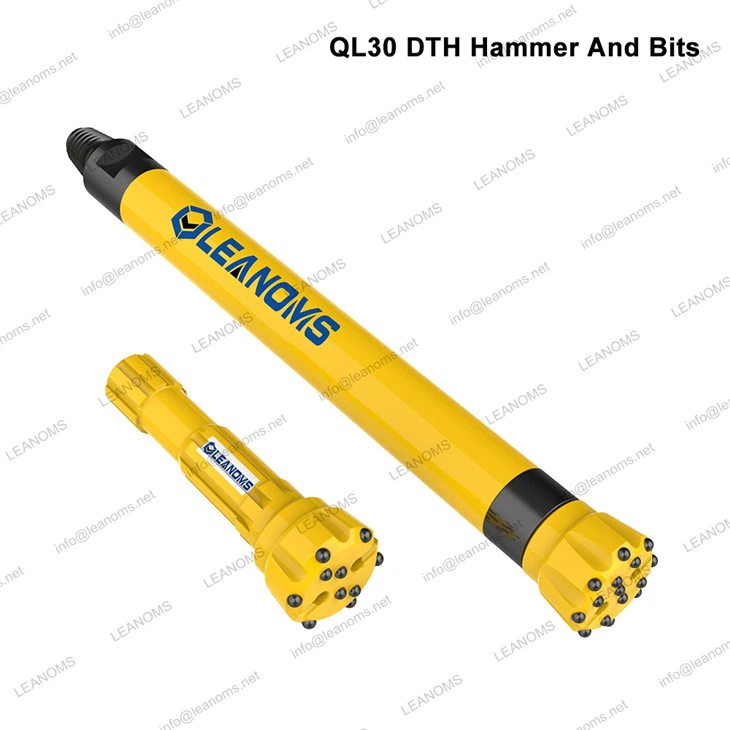
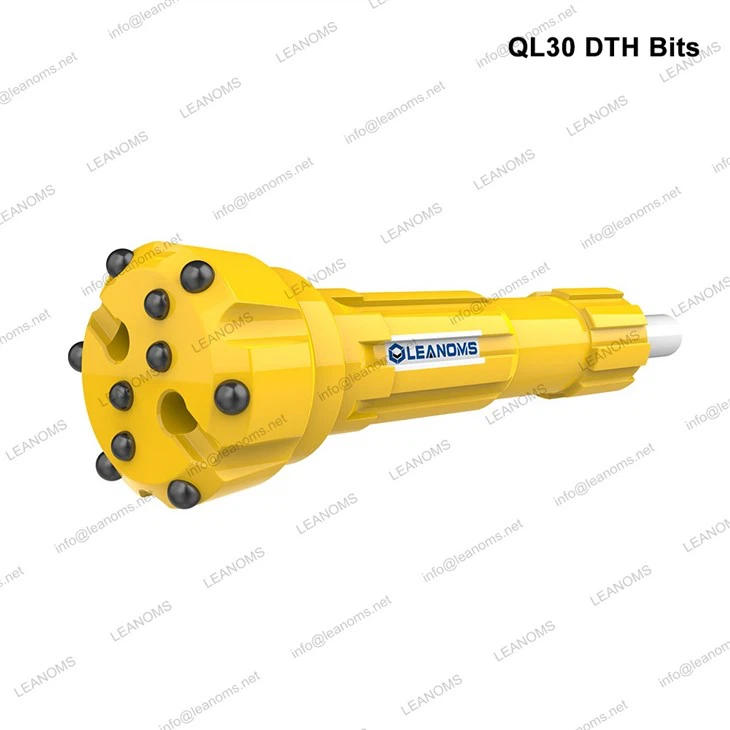
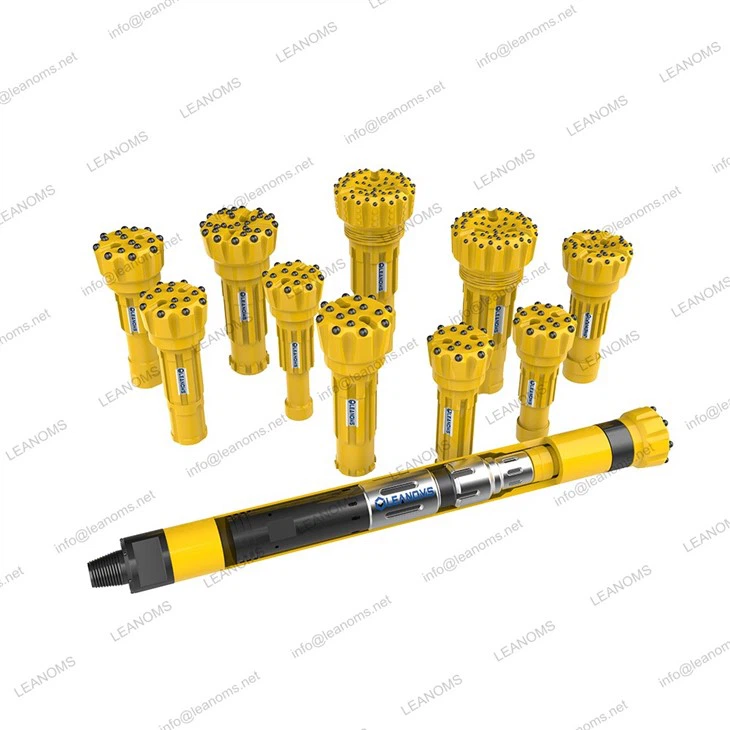
A QL30 DTH Hammer is a specialized drilling tool used in various industries, including mining, construction, and geotechnical engineering. It is a type of percussion drilling equipment designed to create boreholes or blast holes in the earth's subsurface by using a hammering action.
failure analysis
LEANOMS
Lubrication testing
When lubricating oil is injected into the air stream with a dry hard tube or hose, it will take a lot of time to soak the tube walls before the oil can actually reach the impactor. Until the tube wall is not covered by the oil film, virtually no oil reaches the impactor. Therefore, before starting the impactor, it is necessary to ensure that there is an appropriate amount of oil film in the pipeline. It is recommended that before drilling with the drill bit, the impactor should be idling to form a visible oil film before drilling.
Place a small piece of cardboard or wood under the bit to check if the impactor is properly lubricated. If there is a moderate amount of oil film in the impactor, small pieces of cardboard and wood will become wet. If the drill pipe has not been used for a long time and there is no lubricating oil in the drill pipe, you can pour a cup of oil into each drill pipe to help lubricate it. When the water column in the borehole is very high, it must be noted that the lubricating oil has been washed away. At this time, the operator must stop the wet dust removal system and refill the lubricating oil.
Application
LEANOMS
The suitability of a QL30 DTH (Down-The-Hole) hammer for air pressure depends on several factors, including the design of the hammer, and the intended drilling conditions. Generally, DTH hammers are designed to operate within a specific range of air pressures to achieve optimal drilling performance. These hammers rely on compressed air to power the hammering mechanism and drive the drill bit into the ground.

To determine whether a QL30 DTH hammer is suitable for a particular air pressure, you should consider the following:
Application and Geological Conditions: The suitability of air pressure can vary depending on the type of rock or soil you are drilling through. Harder formations may require higher air pressures to achieve effective drilling, while softer formations may require lower pressures.
Drilling Depth: The depth of the borehole can also impact the choice of air pressure. Deeper holes may require higher air pressures to maintain the necessary impact force at the drill bit.
Drill Rig and Compressor Compatibility: Ensure that the drill rig and air compressor you are using are capable of delivering the required air pressure within the specified range for the QL30 DTH hammer.
Drill Bit Selection: The choice of drill bit is closely related to the air pressure. Different bits are designed for specific air pressures and geological conditions. Select a compatible drill bit for your drilling application.
Operator Experience: Operator experience and skill in adjusting and controlling air pressure can also affect drilling performance. Experienced operators can optimize air pressure settings based on the specific drilling conditions encountered on the job.
Danger
LEANOMS
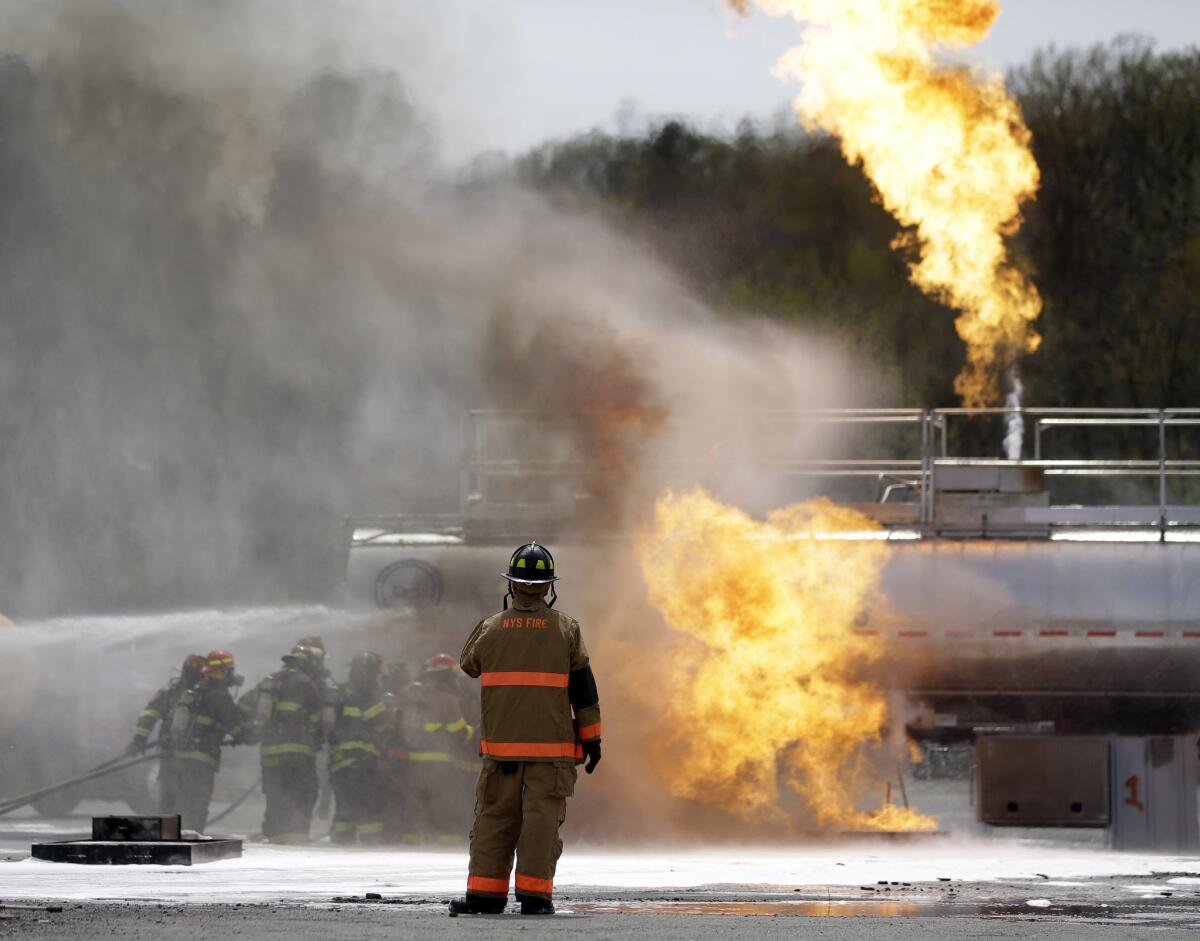
Explosion hazard
If a rock drilling tool comes into contact with an explosive, an explosion may occur. Explosions may cause serious or mortal injuries. To reduce such risk of explosion, never drill near any explosive, including dynamite or other explosives in the rock. Make sure that there are no explosives in the rock. Never drill in an old hole.
Drilling can cause sparks, which may ignite explosive gases and cause explosions.
Explosions may cause serious or mortal injuries. To reduce such risk of explosion, never drill in any explosive environment. Make sure that there are no undetected sources of gas.