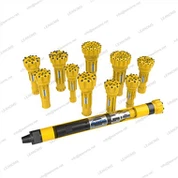
Products Description LEANOMS
The term "DTH hammer assembly" is used to refer to the process of putting together the various components of a Down-The-Hole (DTH) hammer to create a functional and operational drilling tool. The assembly process involves carefully connecting, aligning, and securing each component to ensure their proper functioning as a cohesive unit.
The term "assembly" emphasizes the act of bringing together the individual parts of the DTH hammer to form a complete and functional tool. It highlights the importance of correctly assembling the components to ensure optimal performance, efficiency, and reliability during rock drilling operations.
By referring to it as a "DTH hammer assembly," it specifically identifies the process of constructing the DTH hammer and distinguishes it from other aspects, such as maintenance or operation. It signifies the intricate nature of the assembly process, which requires attention to detail and adherence to manufacturer guidelines to ensure the successful construction of a fully functional DTH hammer.

Specification LEANOMS
The assembly of a DTH (Down-The-Hole) hammer involves carefully putting together its components to ensure proper functioning and optimal performance during rock drilling operations. Each component plays a crucial role in the overall assembly, and attention to detail is necessary to ensure a reliable and efficient hammer. Here is an overview of the DTH hammer assembly process:
1. Top Sub: The assembly begins with the top sub, which serves as the connection point between the hammer and the drill string. It is typically threaded to match the drill rig and facilitates the transfer of compressed air to the hammer.
2. Valve System: The valve system is a critical component of the DTH hammer assembly. It consists of various valves, including check valves and piston valves, that regulate the flow of compressed air within the hammer. These valves ensure proper air pressure control and efficient operation.
3. Air Chamber: The air chamber is an essential part of the assembly and is responsible for storing and maintaining the compressed air. It is designed to withstand high pressures and allows for effective energy transfer to the piston and impact mechanism.
4. Piston and Impact Mechanism: The piston is connected to the valve system and moves up and down within the air chamber. As compressed air enters the chamber, it drives the piston downward, creating impact forces. The impact mechanism, typically comprising an impact ring and a drill bit, receives the energy from the piston and transmits it to the rock formations.
5. Bit Sub: The bit sub is the lowermost part of the DTH hammer assembly. It serves as the connection point between the impact mechanism and the drill bit. The bit sub is designed to withstand the high impact forces and vibrations generated during drilling.
6. Drill Bit: The drill bit is the cutting element of the DTH hammer assembly. It is carefully selected based on the specific drilling requirements, such as rock hardness and drilling application. The drill bit is typically made of robust and wear-resistant materials to withstand the rigors of rock drilling.
During the assembly process, proper alignment and torque application are crucial to ensure optimal performance and longevity of the DTH hammer. Each component must be securely fastened and inspected to ensure smooth operation and prevent any potential leaks or failures.
It is essential to follow the manufacturer's guidelines and recommendations during the assembly process to ensure the proper functioning and safety of the DTH hammer. Regular maintenance and inspection of the assembly are also necessary to identify and address any wear or damage that may occur during drilling operations.
In summary, the DTH hammer assembly involves carefully assembling components such as the top sub, valve system, air chamber, piston, impact mechanism, bit sub, and drill bit. Attention to detail, alignment, and torque application are crucial to ensure the reliable and efficient operation of the DTH hammer during rock drilling operations.