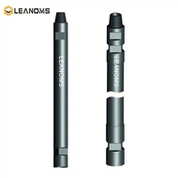
Product introduction LEANOMS
Hammer drilling rods, also known as drill pipes or drill rods, are essential components used in down-the-hole (DTH) hammer drilling systems. These rods play a crucial role in transmitting the impact energy generated by the DTH hammer to the drill bit, allowing efficient drilling through various rock formations.
product Process LEANOMS
The production process of Hammer Drilling Rod involves several important technological processes to ensure the quality and performance of the drill pipes. Here are the key steps and processes typically involved in the production of DTH drill pipes:
Material Selection: The process begins with the selection of high-quality alloy steel as the raw material for the Hammer Drilling Rod. The steel should have the necessary strength, toughness, and resistance to wear and corrosion.
Cutting and Forming: The selected steel is cut into specific lengths based on the required drill pipe dimensions. These steel tubes are then heated and formed into the desired shape through processes like hot rolling or extrusion.
Heat Treatment: The formed drill pipe blanks undergo a heat treatment process to achieve the desired hardness, toughness, and uniformity of material properties. Heat treatment involves heating the steel to a specific temperature and then cooling it at controlled rates.
Thread Cutting: Both ends of the drill pipes are machined to create threaded connections. The type and size of threads are carefully cut to match the DTH hammer and drill bit that will be used with the drill pipes. Thread cutting is a critical step to ensure proper assembly and disassembly of the drilling string.
Surface Treatment: The exterior surface of the Hammer Drilling Rod may undergo surface treatments to enhance corrosion resistance and improve wear characteristics. This can include processes such as shot peening, phosphating, or coating with anti-corrosion materials.
Quality Control: Throughout the production process, quality control measures are implemented. Non-destructive testing techniques like ultrasonic testing or magnetic particle inspection are used to detect defects or inconsistencies in the drill pipes. Defective pipes are identified and rejected.
Thread Protectors: Thread protectors may be added to the threaded ends of the drill pipes to safeguard the threads during transport and handling.
Assembly: If the Hammer Drilling Rods are manufactured in multiple sections, they are assembled and coupled together using appropriate couplings or sub-adapters to achieve the desired drilling depth.
Product Parameters LEANOMS
Here are several important parameters of Hammer Drilling Rod, along with some common data ranges:
Diameter: DTH drill pipes come in various diameters, typically ranging from 3 inches (76 mm) to 6 inches (152 mm) or more, depending on the drilling application.
Length: The length of Hammer Drilling Rod varies to accommodate different drilling depths. Common lengths range from 1.5 meters (4.9 feet) to 6 meters (20 feet) or longer.
Material Strength: Hammer Drilling Rod are usually made from high-strength alloy steel. The tensile strength typically ranges from 90,000 pounds per square inch (620 megapascals) to 180,000 pounds per square inch (1,240 megapascals).
Thread Type: The thread type on DTH drill pipes must match the threads on other drilling components, such as the DTH hammer and drill bit. Common thread types include API, BECO, Remet, and more.
Wear Protection: The connections of Hammer Drilling Rod often feature wear protection, such as hardened steel or carbide inserts, to reduce wear and extend the lifespan.
Weight: The weight of Hammer Drilling Rod depends on their length and diameter. For example, a 3-inch diameter DTH drill pipe of one meter in length may weigh approximately 15 to 20 kilograms.
Inside Diameter: The inside diameter of Hammer Drilling Rod determines the fluid flow rate through the pipes. Common inside diameters range from 1.5 inches (38 mm) to 4 inches (102 mm).
Manufacturing Standards: DTH drill pipes must comply with specific manufacturing standards and specifications, such as API standards, to ensure quality and performance.
Corrosion Resistance: DTH drill pipes often require a certain level of corrosion resistance, especially when used in acidic or corrosive environments.
Torque Capacity: DTH drill pipes must withstand the torque applied by the rotating drill rig. The torque capacity depends on the pipe's diameter and strength.