


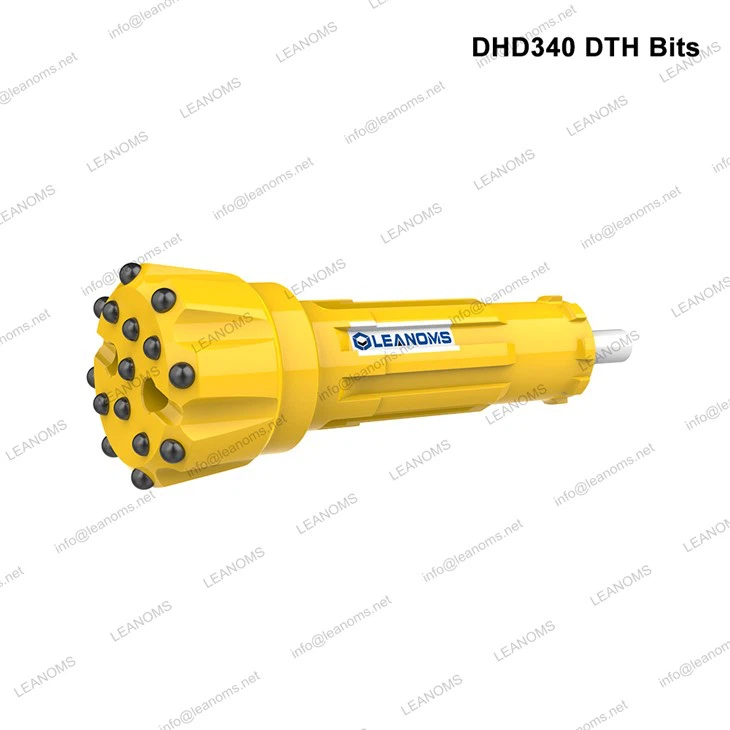


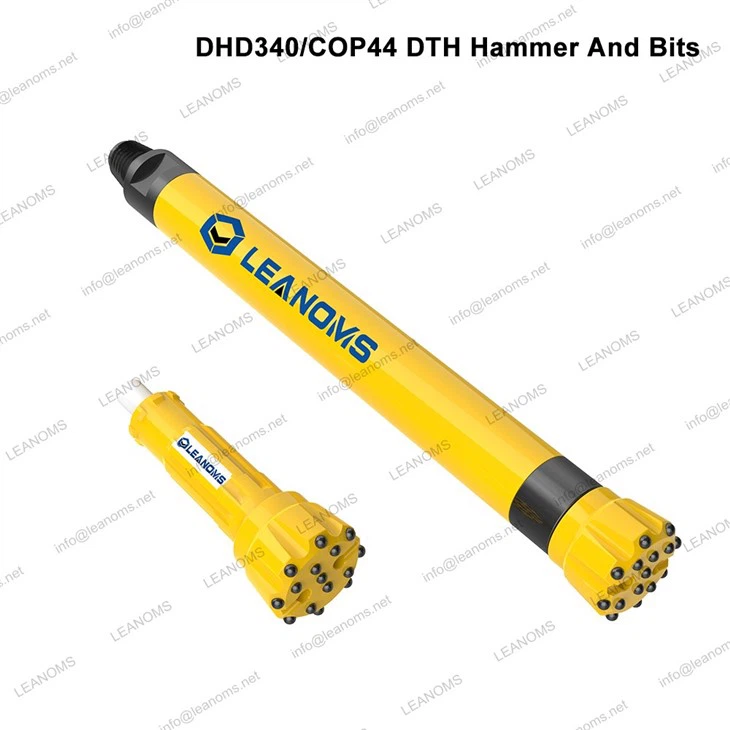

Products Description LEANOMS
Several factors influence the selection of appropriate DTH (Down-The-Hole) bit sizes for drilling operations. These factors include:
1. Hole Diameter: The desired hole diameter is a crucial factor in determining the appropriate DTH bit size. The bit should be compatible with the desired hole diameter to achieve the required drilling objectives and accommodate other components of the drilling system, such as the DTH hammer.
2. Rock Formation: Different rock formations have varying hardness, abrasiveness, and compressive strength. Hard rock formations generally require larger DTH bit sizes with more robust cutting structures to withstand the drilling forces and efficiently break the rock. In contrast, softer rock formations may allow for the use of smaller bit sizes.
3. Drilling Application: The specific drilling application, such as mining, construction, or geotechnical work, influences the choice of DTH bit size. Each application may have different requirements for hole diameter, penetration rates, and drilling efficiency, which influence the selection of the appropriate bit size.
4. DTH Hammer Compatibility: DTH bits need to be compatible with the selected DTH hammer. The bit size must match the hammer's internal components, including the piston diameter and the chuck size. Using the correct bit size ensures efficient energy transfer from the hammer to the bit, optimizing drilling performance.
5. Drilling Parameters: Factors such as desired drilling depth, drilling speed, and available compressor capacity affect the selection of DTH bit sizes. Larger bit sizes may require higher air volumes and pressures to achieve the desired drilling performance, while smaller bit sizes may require less air.
6. Equipment Limitations: The capabilities and limitations of the drilling rig and associated equipment play a role in selecting the appropriate DTH bit size. The rig's horsepower, feed force, and rotation speed should be considered to ensure compatibility with the chosen bit size.
7. Operator Experience: The experience and expertise of the drilling operator can influence the selection of DTH bit sizes. Experienced operators can evaluate rock conditions and drilling requirements to choose the optimal bit size that balances drilling efficiency, tool life, and overall productivity.
It is essential to consider these factors when selecting DTH bit sizes to ensure efficient and effective drilling operations. The right bit size will contribute to improved penetration rates, reduced downtime, and overall drilling success.

Specification LEANOMS

The selection of DTH (Down-The-Hole) bit sizes is closely related to the size and specifications of the DTH hammer being used. Different sizes of hammers have specific requirements for compatible DTH bit sizes. Here are some key considerations:
1. Piston Diameter: The piston diameter of the DTH hammer is an important factor in determining the appropriate DTH bit size. The bit should be compatible with the piston diameter to ensure proper fit and efficient energy transfer from the hammer to the bit. Different piston diameters may require different bit sizes to achieve optimal drilling performance.
2. Chuck Size: The chuck size of the DTH hammer also influences the selection of DTH bit sizes. The bit should match the chuck size to ensure secure attachment and alignment between the hammer and the bit. Using the correct bit size for the specific chuck size is crucial for maintaining drilling accuracy and stability.
3. Hammer Power: The power and impact force generated by the DTH hammer are influenced by its size and design. Larger hammers typically generate higher impact energy, which may require correspondingly larger DTH bit sizes to effectively break the rock and maintain drilling efficiency. Smaller hammers may be compatible with smaller DTH bit sizes for applications with lower power requirements.
4. Air Flow and Pressure: Different sizes of DTH hammers require varying air flow rates and pressures to achieve optimal performance. The selected DTH bit size should be able to handle the air volume and pressure provided by the drilling rig. Proper air flow is essential for efficient flushing of rock cuttings and cooling of the bit during drilling.
5. Drilling Objectives: The specific drilling objectives, such as hole diameter and desired penetration rates, also influence the selection of DTH bit sizes. Larger hammer sizes may be suitable for larger hole diameters and higher penetration rates, while smaller hammer sizes may be preferred for smaller hole diameters or applications that require more precision.
It is crucial to consider the compatibility between the DTH hammer size and the corresponding DTH bit sizes to ensure optimal drilling performance, durability, and overall drilling success. Following the manufacturer's guidelines and consulting with drilling experts can help in selecting the appropriate DTH bit sizes based on the specific hammer size and drilling requirements.


