


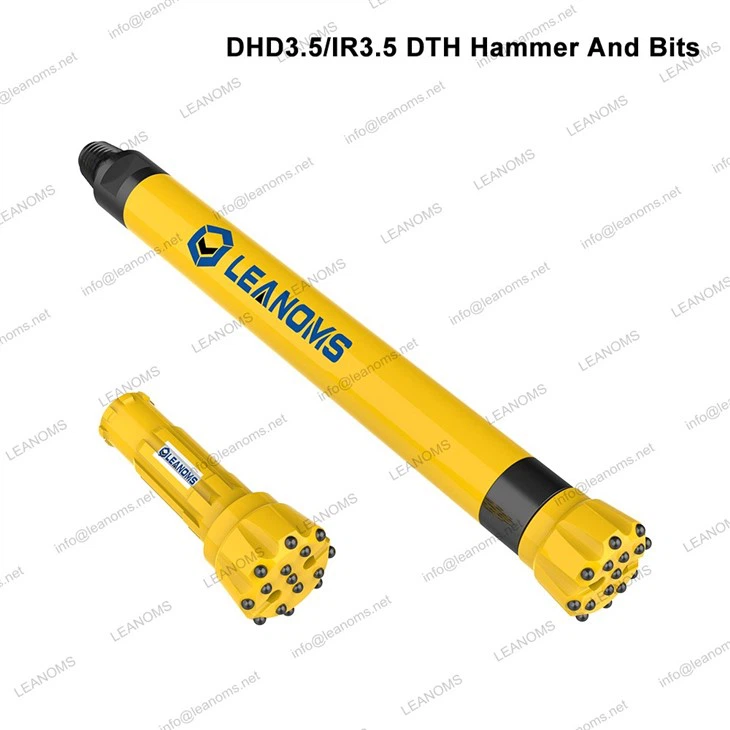

Products Description LEANOMS
Selecting the right DTH bit for drilling is crucial for achieving optimal drilling performance and productivity. Here are some key factors to consider when selecting a DTH bit:
1. Rock Formation: Evaluate the type of rock formation you will be drilling into. Different DTH bits are designed to handle specific rock types, such as soft, medium, or hard formations. Choose a bit that is specifically designed for the rock hardness you will encounter.
2. Bit Design and Shape: Consider the design and shape of the DTH bit. Factors such as the number and arrangement of buttons or inserts, the face shape (concave, flat, or convex), and the bit profile can affect drilling efficiency and bit life. Select a bit design that matches your drilling requirements and ground conditions.
3. Bit Size: Determine the appropriate bit size based on the desired hole diameter. The bit size should match the required hole diameter while considering the drilling rig's capabilities and the desired drilling depth.
4. Button/Insert Material and Configuration: Assess the material and configuration of the buttons or inserts on the DTH bit. Different materials, such as tungsten carbide, offer varying levels of hardness and wear resistance. Consider the button shape, size, and spacing to ensure efficient rock fracturing and good flushing capabilities.
5. Air Pressure and Volume: Take into account the air pressure and volume of your drilling rig. The DTH bit should be compatible with the rig's air supply capacity to ensure proper operation and effective flushing of cuttings.
6. Drilling Application: Consider the specific drilling application, such as water well drilling, mining, construction, or geotechnical investigations. Some DTH bits are specifically designed for certain applications, offering features that enhance performance and durability in those particular drilling tasks.
7. Cost-effectiveness: While considering the above factors, also evaluate the cost-effectiveness of the DTH bit. Compare the performance, durability, and price of different options to choose a bit that offers the best balance between performance and cost over its lifespan.
Consult with experienced drilling professionals, bit manufacturers, or suppliers for guidance and recommendations based on your specific drilling requirements. Their expertise can help you select the most suitable DTH bit for your drilling project, ensuring efficient and successful drilling operations.

Specification LEANOMS
When using a DTH bit for drilling, it is important to follow certain notices to ensure safe and efficient operation. Here are some essential considerations:
1. Proper Handling: Handle the DTH bit with care to prevent damage to the cutting structure and threads. Avoid dropping or mishandling the bit, as it can lead to premature wear or failure.
2. Compatibility: Ensure that the DTH bit is compatible with the drilling rig and other drilling components, such as the hammer and drill pipes. Using incompatible equipment can result in poor performance, excessive wear, and potential damage.
3. Inspection: Before each use, inspect the DTH bit for any signs of damage, wear, or deformation. Check the integrity of the carbide buttons or inserts, the condition of the bit body, and the tightness of the bit threads. Replace any worn or damaged components promptly.
4. Proper Bit Break-In: Perform a proper break-in procedure for new DTH bits. Gradually increase the drilling speed and penetration rate to allow the bit to adapt to the rock formation. This helps optimize bit performance and prolong its lifespan.
5. Appropriate Drilling Parameters: Use the recommended drilling parameters, including rotation speed, air pressure, and flushing rate. Operating within the specified range ensures efficient drilling performance and prevents excessive wear on the bit.
6. Bit Cooling and Flushing: Maintain proper cooling and flushing during drilling to remove cuttings and prevent overheating. Insufficient cooling can lead to reduced drilling performance and premature wear. Monitor the air pressure, volume, and flushing efficiency to ensure effective chip removal.
7. Bit Maintenance: Regularly clean and inspect the DTH bit during drilling breaks or at the end of each shift. Remove any accumulated debris, check for wear on the buttons or inserts, and lubricate the bit threads as recommended by the manufacturer. Promptly address any issues or concerns.
8. Safety Precautions: Always follow established safety procedures when handling and using the DTH bit. Wear appropriate personal protective equipment (PPE) such as safety glasses, gloves, and hearing protection. Adhere to proper rig setup and secure the drilling area to prevent accidents.
By adhering to these notices, operators can ensure the safe and efficient use of the DTH bit for drilling, maximizing its performance and longevity while maintaining a safe working environment.


