```html
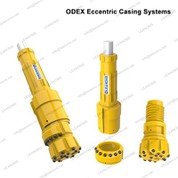
Eccentric Casing System for Water Well Drilling
The Eccentric Casing System is a DTH casing advancement tool designed to drill and push casing forward at the same time in unstable, loose, or fractured formations. It is widely used in water well drilling, geothermal wells, micropiles, grouting holes, and overburden drilling projects where open-hole drilling may collapse before reaching the required depth.
Quick Summary
Product Overview
| Product Name | Eccentric Casing System / ODEX Type Casing System |
| Product Type | DTH casing advancement system with eccentric reaming design |
| Main Material | High-strength alloy steel with carbide button inserts where applicable |
| Surface / Finish | Heat-treated body, machined fitting surfaces, anti-rust oil or painted finish according to order |
| Reference Size | 108mm casing tube matched with 3.5-inch DTH hammer |
| Reference Air Requirement | Around 500 cfm air volume and 20 bar pressure for the stated reference setup |
| Key Application | Water well drilling, geothermal drilling, micropiles, anchoring, grouting holes, and unstable overburden drilling |
| Customization Support | Casing OD, casing wall thickness, hammer model, thread connection, pilot bit, reaming diameter, and packing method can be customized |

What Is an Eccentric Casing System?
An Eccentric Casing System is a down-the-hole drilling tool that allows casing to move forward while the borehole is being drilled. During drilling, the eccentric reamer opens to create a hole larger than the casing outside diameter. The casing follows the drilling assembly downward, helping support the borehole wall and reduce collapse risk.
After the required casing depth is reached, the eccentric reamer can be retracted by reverse rotation, allowing the hammer and drilling assembly to be pulled back through the casing. Depending on the project design, the casing tube may be left in place for water well installation, sampling, grouting, or foundation support, or it may be recovered and reused in suitable conditions.
This makes the DTH casing advancement system especially useful when contractors need better borehole control in loose ground, fractured rock, sand, gravel, clay, cobbles, or mixed overburden formations.
Who Is This Product For?
This product is suitable for buyers who need reliable drilling performance in formations where ordinary open-hole drilling is difficult or risky.
- Water well drilling contractors working in loose or collapsing formations
- Geothermal drilling companies that need stable boreholes through overburden
- Foundation and micropile contractors working in mixed soil and rock layers
- Distributors supplying drilling tools to local contractors
- Project buyers who need customized casing systems for specific rig and compressor conditions
For B2B buyers, the key value is not only the tool price. The more important point is whether the casing system matches the casing tube, DTH hammer, compressor, rig torque, hole diameter, and ground formation. A wrong match may increase wear, cause retraction difficulty, slow penetration, or create unnecessary downtime on site.
Where the Eccentric Casing System Is Used
The eccentric casing system for water well drilling is commonly used when the borehole wall cannot remain stable by itself. It is suitable for:
- Water well casing through loose overburden
- Geothermal wells where upper formations are unstable
- Micropile and foundation drilling
- Anchoring and grouting holes
- Dam, harbor, and construction drilling projects
- Sampling or installation holes requiring better borehole stability
- Short to medium depth casing advancement projects
For the reference setup in the original specification, the system can be connected with a 108mm casing tube and a 3.5-inch DTH hammer. The suggested air supply is around 500 cfm and 20 bar. For this setup, drilling depth is often controlled within about 40 meters for better operation stability, but the actual suitable depth depends on ground condition, casing straightness, hammer performance, air compressor capacity, rig pullback force, and operator experience.
Why Buyers Choose This System
Buyers usually choose an overburden drilling casing system because it helps reduce drilling risk in unstable formations. Compared with open-hole drilling, casing advancement gives the hole wall immediate support while drilling continues.
- Faster cuttings removal when matched with the correct air supply
- Reduced or no need for drilling mud in many overburden applications
- Better borehole stability in loose, fractured, or mixed formations
- Improved drilling continuity when collapse risk is high
- Easier soil, groundwater, or formation observation during drilling
- Possibility to estimate yield or formation condition at certain depths
- Retrievable drilling assembly for use in upcoming holes
- More economical tool usage when the pilot assembly is correctly maintained and reused
For contractors, the commercial benefit is lower risk of abandoned holes, less downtime, fewer unexpected site adjustments, and better control over project cost per meter.

Key Technical Features
Eccentric Reaming Design
The eccentric reamer expands during drilling to create a hole large enough for the casing to follow. When the casing reaches the required depth, reverse rotation helps retract the reamer so the drilling assembly can be removed through the casing.
Simultaneous Drilling and Casing
The casing tube advances together with the drilling tool. This is the main reason the system is effective in formations where the hole may collapse if casing is installed later.
DTH Hammer Compatibility
The system can be designed to match different DTH hammer models, such as 3.5-inch, 4-inch, 5-inch, 6-inch, or larger hammer series depending on casing diameter and project requirements. Before ordering, buyers should confirm hammer type, shank style, connection thread, casing OD, and casing wall thickness.
Retrievable Drilling Assembly
The hammer, pilot bit, and eccentric drilling assembly can usually be recovered after casing advancement is completed. This helps reduce tool cost across multiple holes when operation and ground conditions allow reuse.
Factory-Customized Matching
For project buyers, casing OD and wall thickness are not enough. The supplier should also check reamed diameter, casing shoe, pilot bit diameter, hammer size, thread connection, compressor capacity, and packing method. This avoids the common mistake of buying a system that looks correct by diameter but does not work smoothly on site.
Specification and Performance Explanation
An Eccentric Casing System is not a single standard item. It is a matched drilling assembly. The final specification should be selected according to casing size, hammer type, air pressure, air volume, rig capacity, target depth, and geological condition.
For example, the original reference configuration uses a 108mm casing tube with a 3.5-inch hammer, supported by around 500 cfm air volume and 20 bar pressure. This can be suitable for certain water well or overburden drilling applications, but it should not be treated as a universal setup for every project.
When the formation includes hard boulders, fractured rock, basalt layers, gravel, clay, or mixed soil-rock conditions, tool wear and retraction performance must be checked more carefully. The buyer should provide working conditions before final quotation so the supplier can recommend a safer and more suitable configuration.
Technical Specification Table
| Product Type | Eccentric casing advancement system / ODEX type system |
| Drilling Method | DTH hammer drilling with simultaneous casing advancement |
| Main Components | Pilot bit, eccentric reamer, guide device, casing shoe or matched casing part, hammer connection components |
| Main Material | High-strength alloy steel; tungsten carbide inserts where applicable |
| Heat Treatment | Available according to tool size and working condition |
| Reference Casing Size | 108mm casing tube for 3.5-inch hammer setup |
| Other Size Range | Custom sizes available according to casing OD and hammer model |
| Reference Hammer Match | 3.5-inch DTH hammer for 108mm casing tube |
| Reference Air Supply | Around 500 cfm and 20 bar for the stated reference setup |
| Recommended Depth | For the stated reference setup, usually controlled within about 40 meters depending on ground and equipment |
| Application Formation | Loose overburden, sand, gravel, clay, fractured rock, boulders, weathered rock, unstable formations |
| Application Projects | Water wells, geothermal wells, micropiles, anchoring, grouting, foundation drilling |
| Custom Options | Casing OD, wall thickness, hammer type, shank, thread, reaming diameter, carbide design, marking, packing |
| Quality Inspection | Dimension check, fitting check, surface inspection, material and heat-treatment control where applicable |
| Packing Method | Reinforced wooden crate or export pallet with anti-rust protection |
| Lead Time | About 5–10 days for stock items; about 15–20 days or longer for customized or bulk orders |
| Shipping Method | Express or air for samples and urgent orders; sea freight for bulk orders |
Lower Long-Term Project Risk Compared with Open-Hole Drilling
| Buyer Concern | Open-Hole Drilling in Unstable Ground | Eccentric Casing System |
|---|---|---|
| Borehole Collapse Risk | Higher risk when drilling through loose or fractured formations | Lower risk because casing advances while drilling |
| Drilling Continuity | May need to stop, clean, redrill, or use mud support | More stable progress when casing supports the hole wall |
| Tool Retrieval | Risk of stuck tools if the hole collapses | Drilling assembly can usually be retrieved through the casing after reamer retraction |
| Project Cost Control | Hidden cost may increase due to failed holes, downtime, and extra site work | Better control of cost per meter when matched correctly |
| Formation Suitability | Less suitable for loose sand, gravel, cobbles, and collapsing overburden | Designed for overburden, unstable ground, and mixed soil-rock conditions |
The Value Edge: Factory Direct vs Standard Trading Company
| Comparison Point | Factory Direct | Standard Trading Company |
|---|---|---|
| Price Logic | Same quality, better price because of factory-direct supply and fewer middle layers. | Price may include extra middle-layer cost, especially for custom or urgent orders. |
| Quality Control | Same price, better quality because of tighter control, A-grade material selection, heat treatment management, and better finishing. | Quality depends on the factory source behind the trader, which may change from order to order. |
| Technical Matching | Can check casing OD, wall thickness, hammer model, shank, thread, reaming diameter, and formation before production. | May quote mainly by size without deeper project suitability checking. |
| Customization Flexibility | Stronger service flexibility through customization, project coordination, and special processing. | Customization may take longer because communication must pass through additional layers. |
Order Risk Control & Support
For B2B drilling tool buyers, the real risk is not only the product price. Shipping damage, wrong matching, dimensional variation, urgent delivery, and missing project details can all create extra cost on site. To reduce these risks, we provide practical order protection before shipment.
| Buyer Risk | Our Control Method |
|---|---|
| Breakage or damage during shipping | Reinforced crate packing, anti-rust protection, separated heavy components, and packing photos before shipment. |
| Variation in color, pattern, finish, or marking | For drilling tools, color and pattern are not functional parameters. We focus on finish consistency, marking accuracy, fitting surfaces, dimensions, and pre-shipment photo/video approval. |
| Wrong size or poor mechanical fit | Dimension check, hammer matching check, casing OD and wall thickness confirmation, and pre-shipment assembly fit inspection where applicable. |
| Tight lead time or urgent delivery | Stock checking, priority production line for urgent orders, express or air shipping for samples, and sea freight planning for bulk orders. |
| Confirmed quality responsibility | If failure is confirmed to be caused by our product quality, compensation, replenishment, or remake support can be discussed based on inspection results. |
Commercial Advantages for B2B Buyers
For overseas buyers, a reliable supplier should help reduce project uncertainty before shipment. LEANOMS focuses on drilling clients' real site requirements and challenges, helping buyers reduce avoidable drilling cost and improve productivity through suitable tool selection, stable quality control, and practical after-sales support.
- Factory-direct supply with better cost control
- OEM and custom size support
- Pre-shipment inspection with photos or videos
- Technical matching support before order confirmation
- Reinforced export packing for heavy drilling tools
- Flexible shipping by express, air, or sea depending on order size
- Support for sample orders and bulk orders
- After-sales response for quality or matching issues
Payment methods may include T/T, Western Union, or L/C at sight depending on order value and cooperation terms. For stock items, handling time is usually about 5–10 days. For non-stock or customized items, production may take about 15–20 days or longer depending on quantity and machining workload.
Customization Options
- Casing outside diameter
- Casing inside diameter and wall thickness
- Reamed hole diameter
- Hammer model and shank type
- Thread connection
- Pilot bit structure
- Carbide button design
- Casing shoe match
- Surface finish and marking
- Export packing method
- OEM logo or neutral packing for distributors
Before production, buyers are encouraged to provide drawings, photos of current tools, rig information, compressor specifications, and basic formation details.
How to Evaluate Before Ordering
Before sending an inquiry, please prepare the following information:
- Required casing outside diameter
- Casing wall thickness
- Casing length per piece
- Hammer model and shank type
- Thread connection
- Required drilling depth
- Air compressor pressure and air volume
- Rig model or basic rig capacity
- Main ground formation
- Whether casing will be left in hole or retrieved
- Required quantity and delivery deadline
- Destination port or delivery address
With this information, the supplier can check compatibility and quote a practical solution instead of only giving a unit price.
FAQ
1. What is an eccentric casing system used for in water well drilling?
An eccentric casing system is used to drill and advance casing at the same time in loose, fractured, or unstable formations. It helps keep the borehole open while the DTH hammer and eccentric reamer break the ground ahead of the casing. For water well projects, it is especially useful when open-hole drilling may collapse before the required depth is reached.
2. Can the eccentric casing system be retrieved and reused?
In most projects, the hammer, pilot bit, and eccentric drilling assembly are retrieved after the casing reaches the target depth or the stable formation. The casing tube may be left in the hole or recovered depending on the project design. Reusability depends on wear condition, ground abrasiveness, casing shoe condition, and correct operation during retraction.
3. What information should I provide before ordering an eccentric casing system?
Before ordering, buyers should provide the casing outside diameter, casing wall thickness, hammer model, thread connection, target drilling depth, compressor pressure and air volume, rig capacity, and basic ground formation. This information helps the supplier check compatibility instead of only quoting by diameter.
4. Is an eccentric casing system better than drilling mud for unstable ground?
It depends on the job site. An eccentric casing system can reduce or avoid drilling mud in many overburden and unstable formation applications because the casing supports the borehole as drilling progresses. However, the final choice should be based on geology, water inflow, required hole straightness, local environmental rules, and the available drilling rig.
5. What is the typical lead time for custom eccentric casing systems?
If standard models are in stock, preparation may take about 5–10 days after order confirmation. For custom sizes, non-standard hammer matching, or bulk orders, production usually requires about 15–20 days or longer depending on quantity and machining workload. Buyers with urgent projects should confirm stock, drawings, packing photos, and shipping schedule before payment.
Final Selection Summary
For buyers working in loose, fractured, or unstable formations, the most important point is not only the diameter of the tool, but whether the complete Eccentric Casing System matches the casing tube, DTH hammer, air compressor, rig capacity, and target drilling depth. A properly selected system can help advance casing while drilling, reduce borehole collapse risk, improve drilling continuity, and support more predictable project cost control.
Buyers choose this product because it offers practical advantages in water well drilling, geothermal wells, micropiles, grouting holes, and overburden drilling projects where open-hole drilling may be unreliable. Before ordering, the buyer should check casing OD, casing wall thickness, hammer model, thread connection, compressor air volume and pressure, ground formation, and whether the casing will be left in the hole or retrieved.
From a commercial point of view, factory-direct supply gives overseas contractors and distributors better control over price, quality, customization, inspection, packing, and lead time. For project-based drilling, this means lower replacement risk, fewer matching problems, and stronger support before the tools arrive on site.
References
- Casing Advancement Systems for Down-the-Hole Hammers - Mike Price - Water Well Journal - Water Well Journal
- Drilling Casing: The Ultimate Guide - TerraRoc Editorial Team - TerraRoc - TerraRoc Knowledge Article
- The Ultimate Guide to Casing Drilling Systems - Drill King Editorial Team - Drill King - Drill King Blog
- ODEX Casing System - LEANOMS Editorial Team - LEANOMS - Product Technical Page
- Eccentric Overburden Drilling System - Maxdrill Editorial Team - Maxdrill Rock Tools - Product Technical Page
- Casing Advancement Systems - TerraRoc Editorial Team - TerraRoc - Product Application Page
- Casing Advancer System - Epiroc Editorial Team - Epiroc - Product Page
- ODEX Casing Advancement System - Dam Safety Toolbox Editors - Dam Safety Toolbox - Technical Wiki
{ "@context": "https://schema.org", "@type": "FAQPage", "mainEntity": [ { "@type": "Question", "name": "1. What is an eccentric casing system used for in water well drilling?", "acceptedAnswer": { "@type": "Answer", "text": "An eccentric casing system is used to drill and advance casing at the same time in loose, fractured, or unstable formations. It helps keep the borehole open while the DTH hammer and eccentric reamer break the ground ahead of the casing. For water well projects, it is especially useful when open-hole drilling may collapse before the required depth is reached." } }, { "@type": "Question", "name": "2. Can the eccentric casing system be retrieved and reused?", "acceptedAnswer": { "@type": "Answer", "text": "In most projects, the hammer, pilot bit, and eccentric drilling assembly are retrieved after the casing reaches the target depth or the stable formation. The casing tube may be left in the hole or recovered depending on the project design. Reusability depends on wear condition, ground abrasiveness, casing shoe condition, and correct operation during retraction." } }, { "@type": "Question", "name": "3. What information should I provide before ordering an eccentric casing system?", "acceptedAnswer": { "@type": "Answer", "text": "Before ordering, buyers should provide the casing outside diameter, casing wall thickness, hammer model, thread connection, target drilling depth, compressor pressure and air volume, rig capacity, and basic ground formation. This information helps the supplier check compatibility instead of only quoting by diameter." } }, { "@type": "Question", "name": "4. Is an eccentric casing system better than drilling mud for unstable ground?", "acceptedAnswer": { "@type": "Answer", "text": "It depends on the job site. An eccentric casing system can reduce or avoid drilling mud in many overburden and unstable formation applications because the casing supports the borehole as drilling progresses. However, the final choice should be based on geology, water inflow, required hole straightness, local environmental rules, and the available drilling rig." } }, { "@type": "Question", "name": "5. What is the typical lead time for custom eccentric casing systems?", "acceptedAnswer": { "@type": "Answer", "text": "If standard models are in stock, preparation may take about 5–10 days after order confirmation. For custom sizes, non-standard hammer matching, or bulk orders, production usually requires about 15–20 days or longer depending on quantity and machining workload. Buyers with urgent projects should confirm stock, drawings, packing photos, and shipping schedule before payment." } } ] } ```