





Products Description LEANOMS
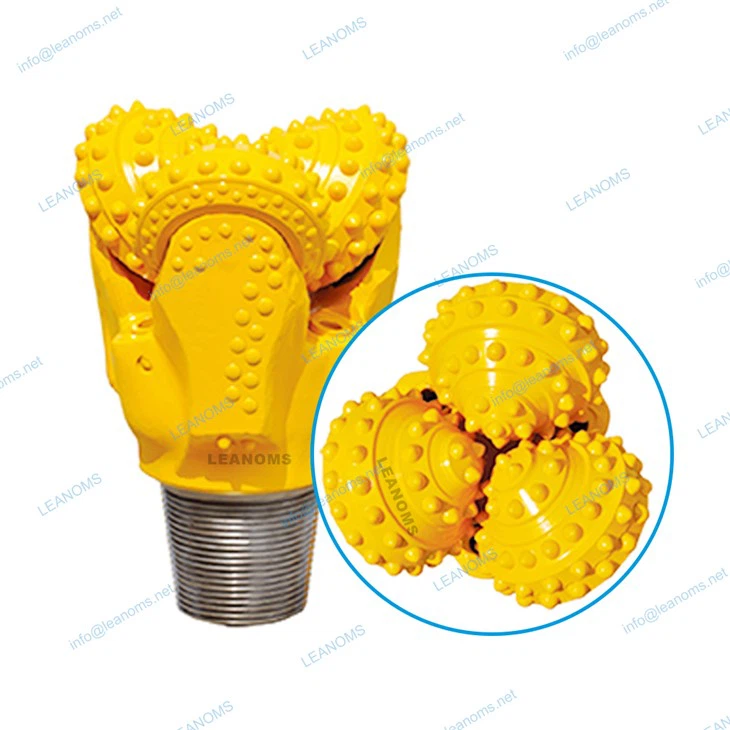
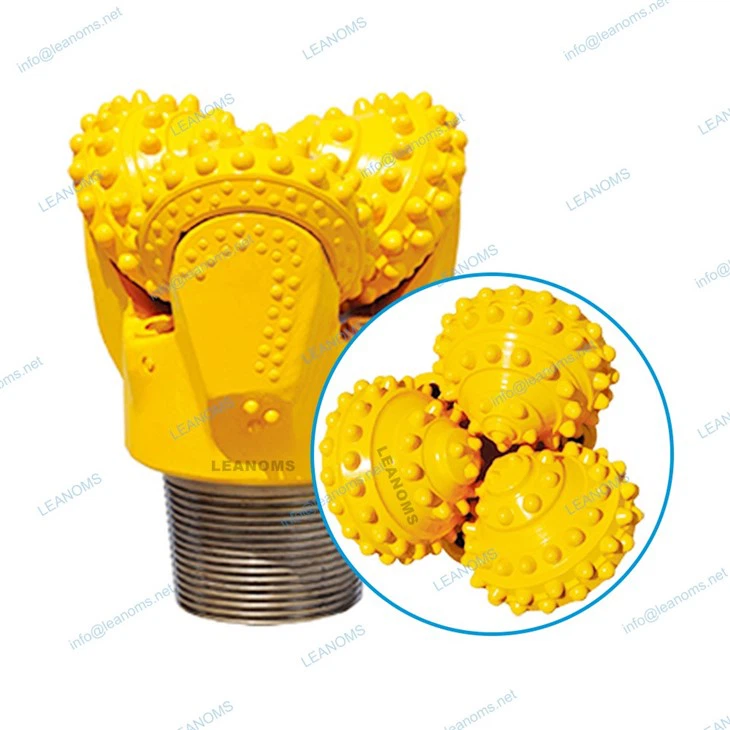
A Tricone bit, also known as a roller cone bit, is a specialized tool used in the drilling industry, particularly in oil and gas exploration, mining, and water well drilling. It's designed to bore through various rock formations, including soft, medium, and hard formations, by utilizing a rotating motion and the cutting action of three individual cone-shaped structures.
Here's an introduction to the key components and working principles of a Tricone bit:
Components:
Cones: The Tricone bit consists of three cones, each with rows of teeth or cutting elements attached to them. These teeth are made from tough materials like tungsten carbide to withstand the high stresses and abrasive conditions encountered during drilling.
Bearings: Each cone is mounted on a set of bearings that allow it to rotate freely. These bearings are designed to withstand both axial and radial loads and are crucial for ensuring smooth rotation of the cones under high drilling forces.
Bit Body: The cones are attached to a central bit body, which is connected to the drill string. The bit body typically has threaded connections that allow it to be screwed onto the end of the drill string.
Working Principle: As the drilling process begins, the drill string is rotated from the surface, which in turn rotates the Tricone bit. The rotating motion causes the cones to roll along the bottom of the borehole. The teeth on the cones come into contact with the rock formations, and due to the combination of rotation and weight applied by the drill string, they create a cutting action.
The teeth are arranged in different patterns and designs depending on the type of formation being drilled. For softer formations, the teeth might be larger and more widely spaced, while harder formations would require smaller, closely spaced teeth. The cones' rotation not only cuts into the rock but also helps to break it into smaller pieces, which are then lifted to the surface by the drilling fluid (mud) that circulates through the well.
Advantages: Tricone bits offer several advantages in drilling operations:
Versatility: They are effective across a wide range of rock formations, from soft to hard. This adaptability makes them suitable for various drilling applications.
Efficiency: Tricone bits can handle high drilling rates and are capable of cutting through challenging formations more efficiently compared to some other drilling methods.
Durability: The use of robust materials for the teeth and bearings makes Tricone bits durable and capable of withstanding the demanding conditions encountered during drilling.


