

Products Description LEANOMS
DTH (Down-the-Hole) drilling tools are specialized equipment used for drilling in hard rock formations. These tools are designed to deliver high-frequency and high-impact force to the drill bit for efficient and effective drilling.

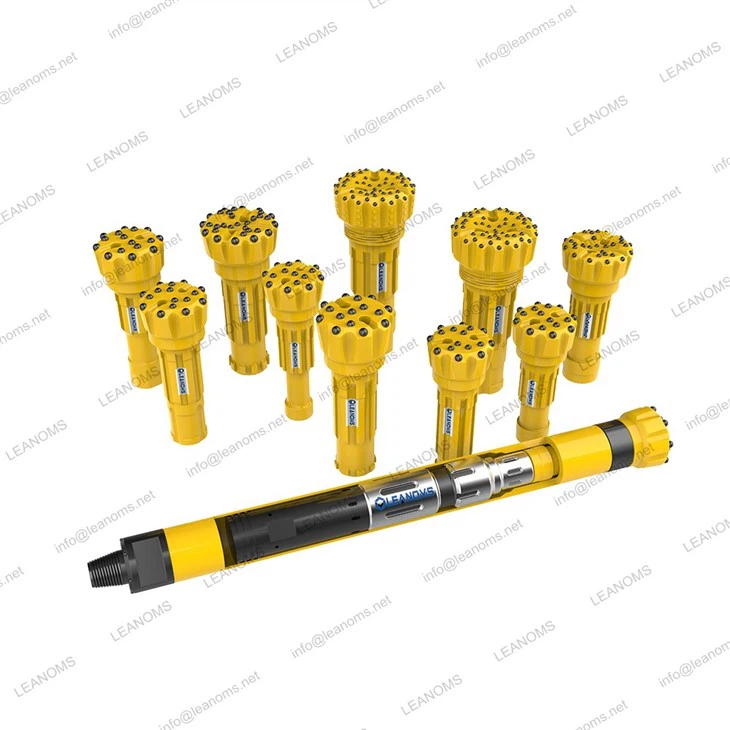
The DTH drilling tools consist of several components, including the hammer, bit, drill pipe, and drill rig. The hammer is the primary component that delivers the impact force to the bit. It is connected to the drill pipe, which carries the compressed air or other drilling fluid to the hammer.
DTH drilling tools are commonly used in various applications such as mining, construction, quarrying, geothermal drilling, and water well drilling. In mining applications, DTH drilling tools are used for blasting holes, which are then filled with explosives to break the rock. In construction and quarrying, DTH drilling tools are used to create holes for building foundations, road construction, and excavation.
In geothermal drilling, DTH drilling tools are used to drill deep into the earth to access geothermal reservoirs for energy production. In water well drilling, DTH drilling tools are used to create boreholes for accessing underground water sources.
Overall, DTH drilling tools are versatile and widely used in a range of industries where efficient drilling in hard rock formations is required.
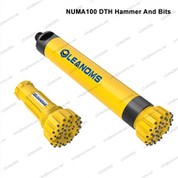
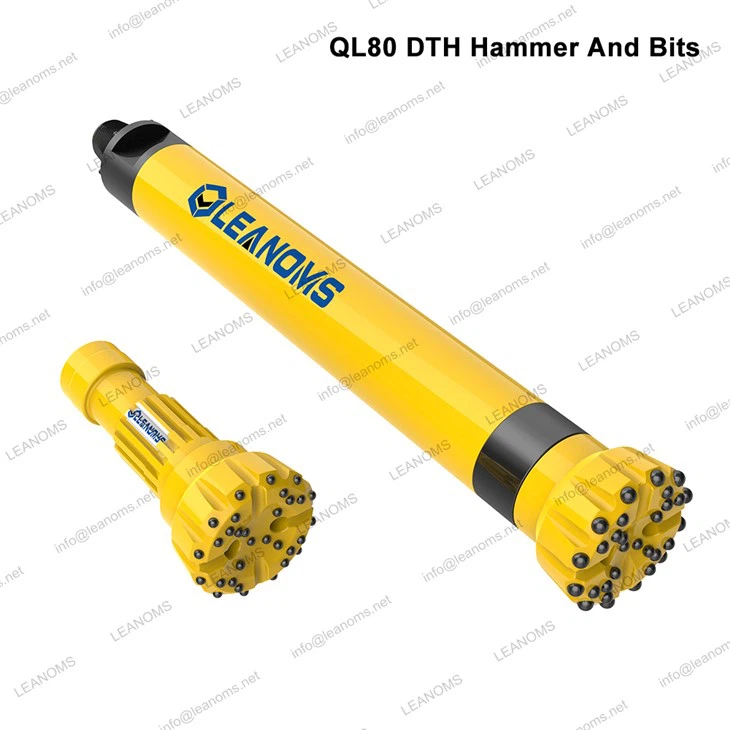
QL80 Hammer is a type of Down-The-Hole (DTH) hammer used in drilling operations. DTH hammers are used to drill holes in hard rock formations. They work by using compressed air to drive a piston inside the hammer, which in turn hits the bit at the bottom of the hole. This impact pulverizes the rock, and the cuttings are blown out of the hole by the compressed air.
The QL80 DTH hammer is a specific type of hammer that is designed to be used with a 8-inch drill bit. The "QL" in the name stands for "Quick Link," which refers to the way the hammer connects to the drill pipe. The QL80 DTH hammer is used in a variety of drilling applications, including mining, quarrying, construction, and exploration. It is known for its high performance, reliability, and long service life.
The QL80 Hammer is a down-the-hole (DTH) hammer used for drilling in mining, construction, and exploration applications. If a QL80 Hammer fails, it can lead to downtime, increased costs, and safety concerns. Here are some potential causes and methods of failure analysis for a QL80 Hammer:
Insufficient lubrication: One of the common causes of QL80 Hammer failure is insufficient lubrication. If the hammer is not properly lubricated, it can cause excessive heat and wear on the internal components, which can lead to premature failure. To analyze this failure mode, it is recommended to inspect the internal components of the hammer, including the piston, bit, and internal air passages, for signs of excessive wear or damage.

Overheating: Overheating is another common cause of QL80 Hammer failure. This can be due to various reasons such as high drilling speed, poor ventilation, and high ambient temperature. Overheating can cause the internal components of the QL80 Hammer to expand and bind, leading to failure. To analyze this failure mode, it is recommended to inspect the internal components of the QL80 Hammer for signs of heat-related damage such as discoloration, warping, or melting.
Blockage in the air passages: Blockage in the air passages is another potential cause of hammer failure. If the air passages are blocked, it can cause a drop in air pressure and reduce the performance of the hammer. To analyze this failure mode, it is recommended to inspect the internal air passages of the hammer for signs of blockage, such as debris or excessive wear.
Incorrect drilling parameters: If the drilling parameters such as air pressure, rotation speed, and feed force are not set correctly, it can cause excessive wear and tear on the hammer, leading to premature failure. To analyze this failure mode, it is recommended to review the drilling parameters used during the drilling operation and compare them with the recommended parameters for the QL80 Hammer.
Material defects: Finally, material defects can also cause QL80 Hammer failure. This can be due to various reasons such as poor quality materials, manufacturing defects, or damage during transportation. To analyze this failure mode, it is recommended to inspect the hammer for signs of material defects such as cracks, fractures, or other damage.
In summary, failure analysis of a QL80 Hammer requires a detailed inspection of the internal components, drilling parameters, and material defects. By identifying the root cause of the failure, appropriate corrective actions can be taken to prevent future failures and ensure safe and reliable drilling operations.
Specification LEANOMS
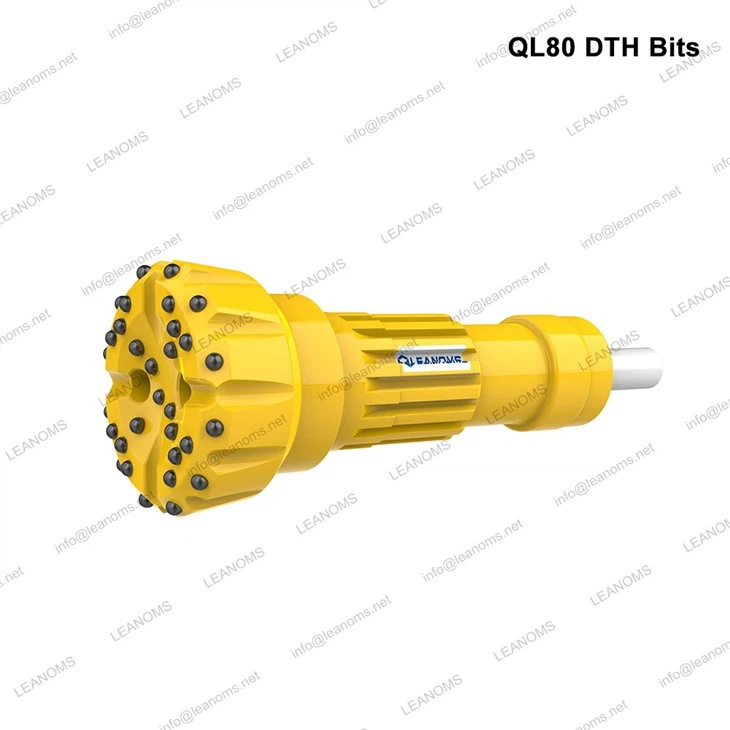
Technical Parameters Of QL80 DTH Bits
| Diameter | Gauge Buttons (mm) |
Front Buttons(mm) | Weight(KG) | Part Number | ||||
| mm | Inch | Flat Face | Convex Face | Concave Face | Face Type | |||
| 203 | 8 | Φ18*10 | Φ18*8 | / | Φ16*5 | Concave Face | 50.1 | LR-QL80-203CC |
| 216 | 8 1/2 | Φ18*10 | Φ18*8 | / | Φ16*6 | Concave Face | 54.3 | LR-QL80-216CC |
| 219 | 8 5/8 | Φ18*10 | Φ18*8 | / | Φ16*6 | Concave Face | 54.8 | LR-QL80-219CC |
| 229 | 9 | Φ18*12 | Φ16*12 | / | Φ16*7 | Concave Face | 56.4 | LR-QL80-229CC |
| 235 | 9 1/4 | Φ18*12 | Φ16*12 | / | Φ16*7 | Concave Face | 57.4 | LR-QL80-235CC |
| 245 | 9 5/8 | Φ19*12 | Φ16*12 | / | Φ16*8 | Concave Face | 61.5 | LR-QL80-245CC |