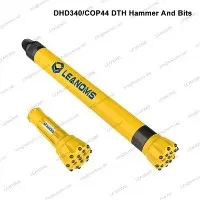
Products Description LEANOMS
The DHD 340 DTH Hammer and Mission40 are two different types of DTH hammers used in drilling operations, and they differ in several aspects:
1. Design and Construction: The DHD 340 DTH Hammer and Mission40 have different designs and construction. The DHD 340 hammer is specifically designed with a valveless design and operates with a reverse circulation mechanism. In contrast, the Mission40 hammer follows a different design approach, typically with a valve system and a different internal configuration.
2. Operating Parameters: Both hammers have different operating parameters. The DHD 340 DTH Hammer typically operates at lower air pressures and delivers moderate impact energy suitable for medium-scale drilling operations. The Mission40 hammer, on the other hand, may operate at higher air pressures and can provide higher impact energy for more demanding drilling applications.
3. Compatibility: Compatibility with drill bits is another point of differentiation. The DHD 340 DTH Hammer is designed to be compatible with DHD series drill bits, ensuring versatility and ease of use. The Mission40 hammer, on the other hand, is typically compatible with specific series or types of drill bits manufactured by the same company.
4. Range of Application: The DHD 340 DTH Hammer is often used in various drilling applications, including mining, quarrying, construction, and water well drilling. Its design and operating parameters make it suitable for medium-scale drilling operations in different rock formations. The Mission40 hammer, depending on the specific model, may be more suitable for larger-scale drilling projects or specific drilling conditions that require higher impact energy.
5. Manufacturer: The DHD 340 DTH Hammer is typically associated with specific manufacturers that specialize in DTH drilling tools, while the Mission40 hammer is associated with a different manufacturer or brand. Each manufacturer may have their own design philosophy, quality standards, and customer support.
It's important to note that specific models and variations of these hammers may have different features and performance characteristics. Therefore, it is recommended to consult the respective manufacturers' specifications and guidelines to fully understand the differences and select the most suitable hammer for a particular drilling project.

Specification LEANOMS

The face and button of a DHD 340 DTH bit are influenced by several factors, including:
1. Rock Formation: The type and hardness of the rock formation being drilled have a significant impact on the face and button design. Harder rock formations require a more robust and durable face and button design to withstand the abrasive nature of the drilling process. Softer rock formations may allow for a less aggressive face and button design.
2. Drilling Application: The specific drilling application also affects the face and button design. For example, in mining or quarrying operations where high penetration rates are desired, a more aggressive face and button design with larger buttons and a greater number of flushing holes may be used. On the other hand, for geotechnical drilling or water well drilling applications, where a smooth and controlled drilling process is important, a different face and button configuration may be selected.
3. Bit Diameter: The diameter of the DHD 340 DTH bit plays a role in determining the size and arrangement of the buttons on the face. Larger bit diameters typically accommodate larger buttons, providing more impact energy and improved drilling efficiency.
4. Compressive Strength: The compressive strength of the rock formation affects the choice of button material and design. Harder rock formations require harder and more wear-resistant button materials to withstand the high compressive forces encountered during drilling.
5. Operator Experience and Preference: Operator experience and preference can also influence the choice of face and button design. Some operators may have specific preferences based on their experience and the performance they have observed with certain configurations. This can influence the selection of the face and button design that best suits their drilling style and objectives.
It's important to note that the specific manufacturer and their product offerings may also provide different options for face and button designs, allowing for customization based on various factors. Ultimately, the selection of the face and button design for a DHD 340 DTH bit should consider the rock formation, drilling application, bit diameter, compressive strength, and operator preferences to achieve optimal drilling performance and longevity.