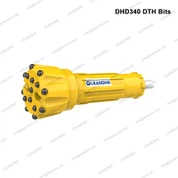
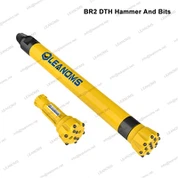
Products Description
LEANOMS

Here are some key differences between a 90 DTH bit and other drill bits:
Drilling Method: A DTH bit is used in Down-The-Hole drilling, which involves a hammer system that delivers powerful blows to the bit. Other drill bits, such as rotary bits or percussion bits, may use different drilling methods like rotary drilling or percussion drilling.
Application: DTH bits are commonly used in deep-hole drilling, where significant depths need to be reached, such as in mining or oil and gas exploration. Other drill bits may be used for shallower drilling applications or specific tasks like drilling through concrete, wood, or metal.
Design: DTH bits are specifically designed for use with DTH hammers and drilling rigs. They typically have a robust and sturdy construction to withstand the high-impact forces of DTH drilling. Other drill bits may have different designs tailored for specific drilling methods or materials.
Size and Diameter: The 90mm measurement in a 90 DTH bit refers to the diameter of the bit. It indicates that the bit is designed to drill a hole with a diameter of 90 millimeters. Other drill bits come in various sizes and diameters, depending on the specific drilling requirements.
Drilling Speed: DTH drilling, including the use of a 90 DTH bit, is known for its high drilling speeds, which can be advantageous in certain applications. Other drill bits may have different drilling speeds depending on the drilling method and the materials being drilled.
It's important to note that the specific differences between drill bits can vary based on their intended use, design, and the industry in which they are used. Therefore, it's always recommended to consult the manufacturer's guidelines and specifications to understand the precise characteristics and applications of a particular drill bit.
DTH drilling is a method used in mining and construction industries to drill holes in the rock, usually for blasting, drilling water wells, or exploration purposes. Here are some scenarios where DTH drilling bits can be used:
Mining: 90 DTH Bit is commonly used in mining operations for drilling blast holes in hard rock. These holes are typically used to insert explosives for rock fragmentation and ore extraction.

Construction: 90 DTH Bit is utilized in construction projects to drill holes for various purposes, such as anchor installation, piling, foundation drilling, and geotechnical investigations.
Water Wells: 90 DTH Bit is employed in drilling water wells for residential, commercial, or agricultural purposes. The bits are used to penetrate through rock formations and reach underground water sources.
Geotechnical Exploration:90 DTH Bit is used in geotechnical investigations and exploratory drilling to collect rock samples, assess subsurface conditions, and determine the feasibility of construction projects.
Oil and Gas Exploration: 90 DTH Bit can be utilized in oil and gas exploration, particularly in areas where conventional drilling methods may be challenging or expensive. These bits can help penetrate hard rock formations and assess the presence of hydrocarbon reserves.
It's worth noting that the specific type and size of 90 DTH Bit used in each scenario would depend on factors such as the geological conditions, desired hole diameter, required drilling depth, and the type of rock or formation being drilled.
Specification
LEANOMS
Technical Parameters Of DHD3.5 DTH Bits
| Diameter | Gauge Buttons (mm) |
Front Buttons(mm) | Weight(KG) | Part Number | ||||
| mm | Inch | Flat Face | Convex Face | Concave Face | Face Type | |||
| 90 | 3 1/2 | Φ14*6 | Φ12*2 | Φ13*2 | / | Convex Face | 4.5 | LR-DHD3.5-90CV |
| 90 | 3 1/2 | Φ14*6 | Φ12*4 | / | / | Flat Face | 4.5 | LR-DHD3.5-90FF |
| 95 | 3 3/4 | Φ14*6 | Φ13*2 | Φ13*2 | / | Convex Face | 4.6 | LR-DHD3.5-95CV |
| 100 | 3 15/16 | Φ14*6 | Φ13*2 | Φ13*3 | / | Convex Face | 4.8 | LR-DHD3.5-100CV |
| 105 | 4 1/8 | Φ14*6 | Φ13*2 | Φ13*3 | / | Convex Face | 5.0 | LR-DHD3.5-105CV |
| 105 | 4 1/8 | Φ13*8 | Φ12*6 | / | / | Flat Face | 5.0 | LR-DHD3.5-105FF |