


Opening Dialogue:
- Site Engineer: "We replaced the diamond core bit again-barely 120 meters this time. Same rock, same rig. What's going wrong?"
- Drilling Supervisor: "RPM looks fine, but penetration is slowing. Diamonds are glazing."
- Procurement Manager: "The bit was cheaper. Are we paying for it in downtime?"
- Engineer: "If wear keeps accelerating, we'll miss the sampling window-and blow the budget."
This is a familiar conversation on mineral exploration sites worldwide. Fast wear on diamond core drill bits isn't just a tooling issue-it's a productivity, data quality, and cost-per-meter problem. The good news? Premature wear is usually predictable-and fixable. In this guide, we'll diagnose why diamond coring bits wear too fast and provide practical fixes that restore speed, extend life, and protect sample integrity.

The Optimal Performance of LEANOMS Diamond Core Drill Bit Includes (I)
1) Enhanced Wear Resistance
Fast wear often starts with a matrix mismatch. When the bond is too hard for the formation, diamonds polish (glaze) instead of self-sharpening; too soft, and diamonds shed prematurely.
How LEANOMS fixes it
- Formation-matched matrix grades (from soft/abrasive to hard/competent rock)
- Controlled diamond exposure for consistent cutting edges
- Thermal stability to resist micro-cracking under high RPM
Result: Stable wear flats, predictable life, and lower cost per meter across long runs.
2) High-Speed Drilling (Without Burning Diamonds)
Speed kills bits when RPM, WOB (weight on bit), and flushing aren't balanced. Excessive RPM with low WOB causes glazing; high WOB with poor flushing overheats the crown.
How LEANOMS fixes it
- Optimized crown geometry for efficient chip evacuation
- Hydraulic windowing to keep diamonds cool
- RPM/WOB envelopes supplied per formation
Result: Faster penetration without thermal damage.
The Optimal Performance of LEANOMS Diamond Core Drill Bit Includes (II)
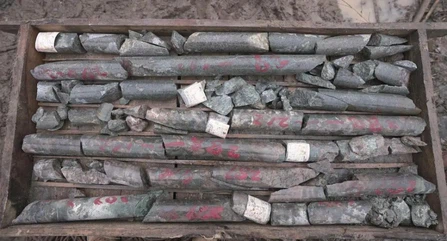
3) Uncompromised Sample Quality
Worn or overheated bits smear fractures, grind fines, and reduce recovery-undermining geological decisions.
How LEANOMS fixes it
- Even diamond distribution to minimize vibration
- Crown profiles that reduce side loading
- Stable cutting action for intact cores
Result: Clean breaks, higher recovery, and decision-grade samples.
4) Reliable in Tough Conditions
Deep holes, broken zones, and abrasive transitions accelerate wear.
How LEANOMS fixes it
- Reinforced gauge protection
- Abrasion-resistant matrices for transitional strata
- Compatibility with coring system for deep hole exploration
Result: Fewer trips, fewer surprises.
Why Diamond Core Drill Bits Wear Fast (Root Causes)
Matrix–Formation Mismatch
- Symptom: Polished crown, low ROP
- Fix: Softer matrix for hard rock; harder matrix for abrasive formations
Incorrect Operating Parameters
- Symptom: Burn marks, rapid diamond loss
- Fix: Reduce RPM, increase WOB gradually, improve flushing
Poor Flushing & Cuttings Regrind
- Symptom: Heat checks, uneven wear
- Fix: Increase flow, verify nozzle paths, adjust mud properties
Inconsistent Diamond Quality
- Symptom: Random failures
- Fix: Certified diamond grades and tight QA
Parameter Fixes That Extend Bit Life (Quick Reference)
| Issue | What You See | Immediate Adjustment |
|---|---|---|
| Glazing | Shiny crown | ↓ RPM, ↑ WOB slightly |
| Overheating | Burn marks | ↑ Flow, pause to cool |
| Diamond loss | Short life | Harder matrix |
| Slow ROP | Vibration | Check alignment, crown profile |
Expert Insights, Trends & Case Evidence
Industry Trends
- Deeper exploration demands matrix engineering over one-size-fits-all bits.
- Cost-per-meter KPIs are replacing unit price in procurement decisions.
- Customization (custom diamond core bits) is now standard for competitive programs.
Expert Opinion
Senior drilling engineers consistently report 20–40% life gains when matrix grade and hydraulics are tuned to formation abrasivity rather than hardness alone.
Scientific Data (Selected Findings)
- Studies on impregnated diamond tools show bond hardness optimization can reduce wear rate by 25–35% in competent igneous rock.
- Thermal imaging confirms proper flushing lowers crown temperature by >100°C, preventing micro-fracture propagation.
Practical Operations & Real-World Feedback
Case 1: Abrasive Volcanics (West Africa)
- Problem: 90–120 m bit life
- Fix: Harder matrix + increased flow
- Result: 165 m average; fewer trips
Case 2: Deep Hole Program (Central Asia)
- Problem: Sample smearing at depth
- Fix: Crown profile change + RPM reduction
- Result: Improved recovery, faster logging
Case 3: Budget-Constrained Exploration
- Problem: Cheap bits, high downtime
- Fix: Lifecycle costing + parameter sheet
- Result: Lower total spend despite higher unit price
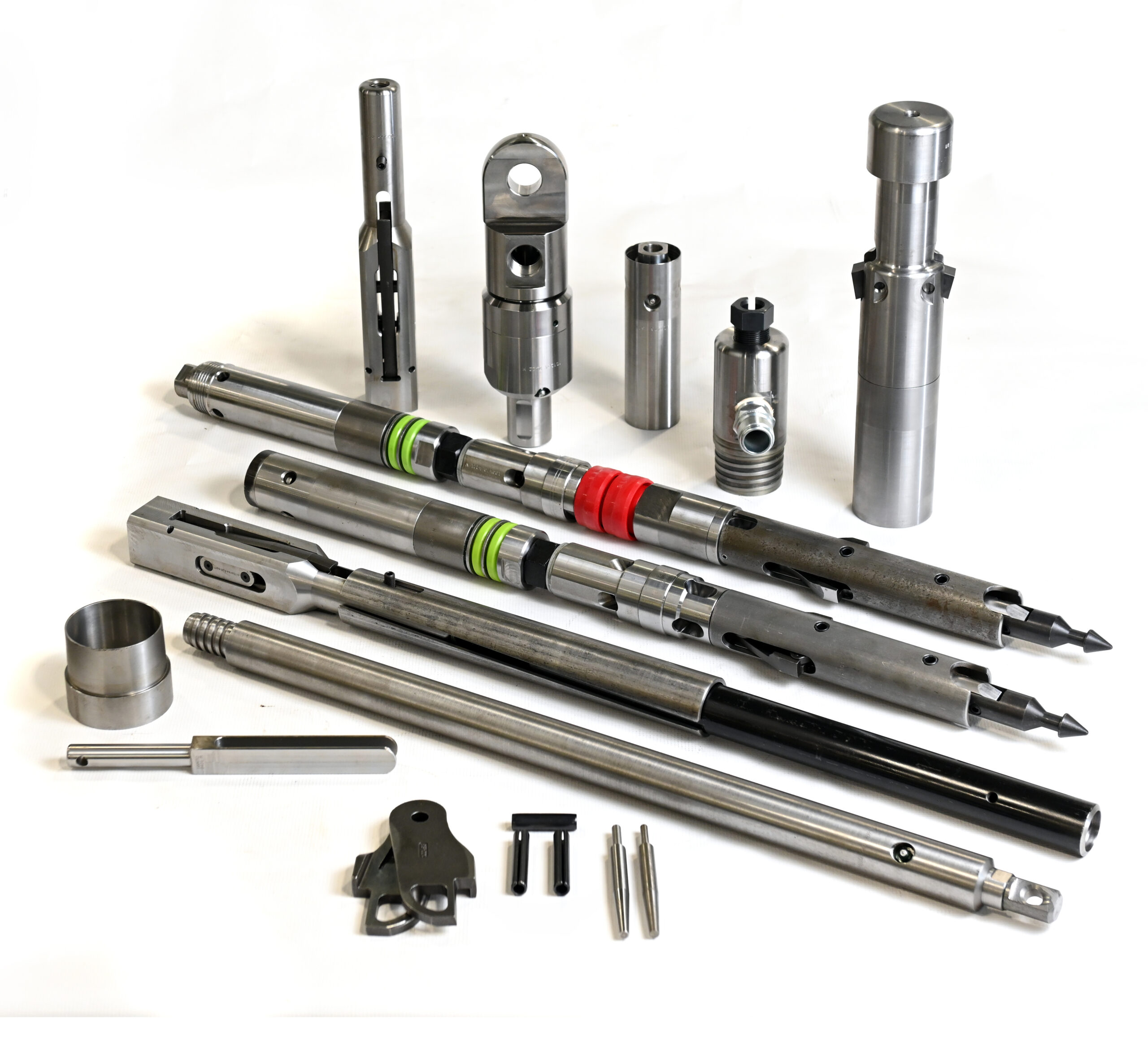
Application Note: LEANOMS core drilling systems deliver exceptional value over the entire equipment lifecycle, combining robust construction with optimized drilling parameters to significantly reduce cost per meter in long-term exploration projects.
(Internal link suggestion)
User Feedback (Field Voices)
- "Once parameters were aligned, wear stabilized immediately."
- "Sample quality improved-geology team noticed it first."
- "Cost per meter dropped even with fewer spare bits on site."

FAQ (Google-Style Popular Searches)
Q1: How long should a diamond impregnated core bit last?
A: Typically 120–250 m, depending on formation, parameters, and matrix match.
Q2: Why does my bit glaze in hard rock?
A: Matrix too hard or RPM too high-reduce RPM or select a softer matrix.
Q3: Are custom diamond core bits worth it?
A: Yes-customization often cuts wear 20–40% and improves recovery.
Q4: What flushing rate prevents overheating?
A: Enough to evacuate cuttings continuously; increase flow if crown runs hot.
Q5: How do I compare suppliers fairly?
A: Use cost per meter, not unit price-include trips, downtime, and recovery.
Summary-So, Why Does Your Bit Wear Fast?
Answer: Because wear is driven by matrix mismatch, incorrect parameters, and poor flushing-not luck.
Fix: Match the matrix to the formation, tune RPM/WOB/flow, and choose a supplier focused on lifecycle performance, not just price. Do that-and fast wear becomes a solved problem.
SEO Tags
diamond core drill bit, diamond coring, mineral exploration drilling, diamond impregnated core bit for sale, custom diamond core bits, coring system for deep hole exploration, core barrel and bits set price for mining project, drilling wear, bit glazing, core recovery, drilling parameters, RPM WOB flushing, supplier, wholesale, factory, manufacturer, buy, cheap, China, high quality, OEM, ODM, exploration tools, geological drilling, mining drilling, abrasive rock, hard rock drilling, lifecycle cost, cost per meter, drilling efficiency, sample quality, deep hole coring, drilling optimization, bit matrix, diamond tools, mining supplier, drilling factory, bulk order, global supply
References
- Hutchings, I. Tribology: Friction and Wear of Engineering Materials - https://en.wikipedia.org/wiki/Tribology
- Wikipedia Authors. Diamond tool - https://en.wikipedia.org/wiki/Diamond_tool
- Cook, N. Rock Mechanics and Engineering - https://en.wikipedia.org/wiki/Rock_mechanics
- McCarthy, P. Mineral Exploration Drilling - https://en.wikipedia.org/wiki/Exploration_geophysics
- Rowley, J. Drilling Fluids and Hydraulics - https://en.wikipedia.org/wiki/Drilling_fluid
- Eijkelkamp. Core Drilling Principles - https://en.wikipedia.org/wiki/Core_drilling
- ASM International. Wear Mechanisms - https://en.wikipedia.org/wiki/Wear
- ISO. Tool Materials and Performance - https://www.iso.org
- Schlumberger. Drilling Parameters Optimization - https://en.wikipedia.org/wiki/Directional_drilling
- Society of Mining Engineers. Best Practices in Exploration - https://www.smenet.org
