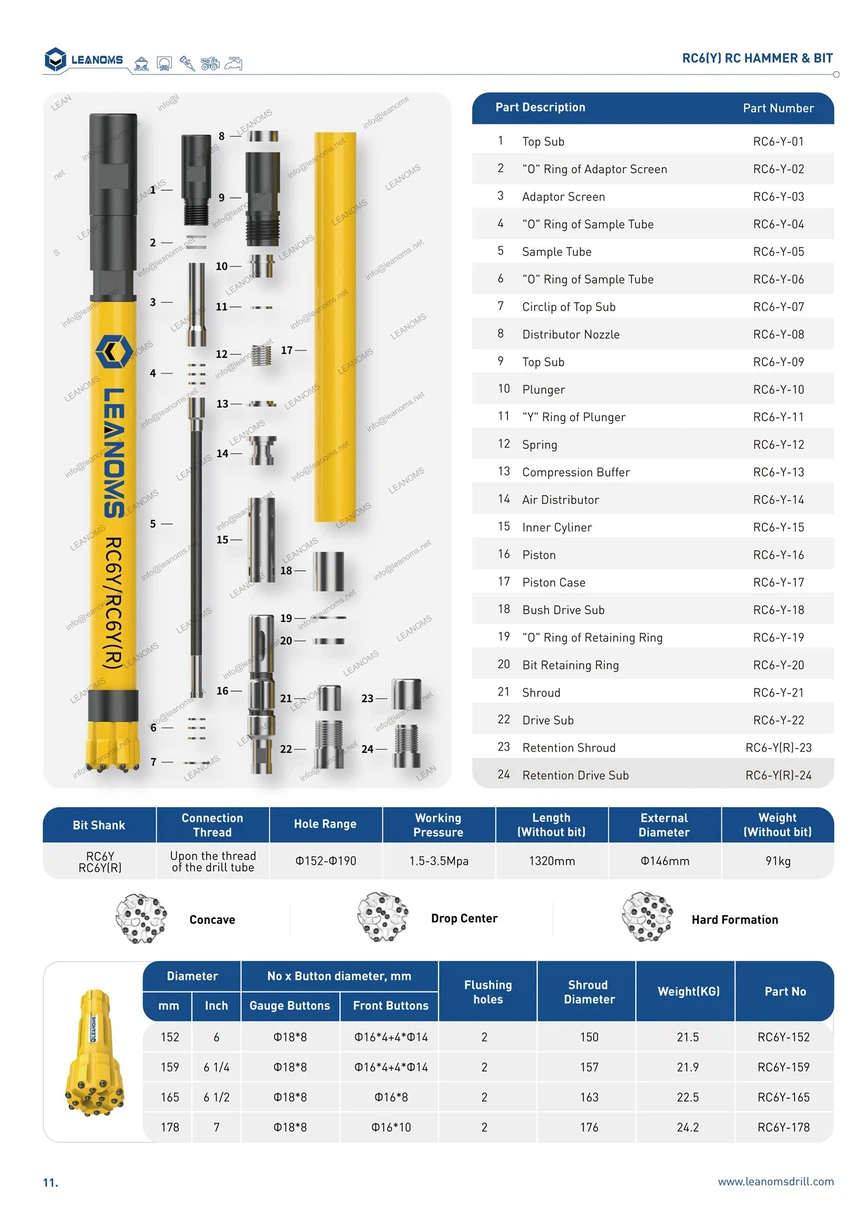
Forward Circulation (also known as Conventional Circulation) and Reverse Circulation are two primary methods of drilling used in various industries, each with distinct processes and applications. Here's a comparison between the two:
Forward Circulation:
Drilling Method: In forward circulation drilling, the drilling fluid (usually mud or water) is pumped down through the drill pipe and exits through nozzles or openings in the drill bit. The fluid then travels back up the annular space between the drill pipe and the borehole wall, carrying cuttings with it.
Cuttings Removal: Cuttings are carried up to the surface through the annular space between the drill pipe and the borehole wall. The drilling fluid's viscosity helps in lifting the cuttings to the surface, where they are separated from the mud, and the mud is recirculated.
Application: Forward circulation drilling is commonly used in various drilling applications, including oil and gas drilling, water well drilling, and geotechnical exploration. It is versatile and can be used in a wide range of geological formations.
Reverse Circulation:
Drilling Method: In reverse circulation drilling, the drilling fluid is pumped down through the drill pipe and exits through openings in the drill bit. The fluid then travels back up the center of the drill pipe, carrying cuttings with it. At the surface, the drilling fluid and cuttings are collected in a sample chamber before the fluid is filtered and recirculated.
Cuttings Removal: Cuttings are carried up through the center of the drill pipe, providing a more efficient and reliable method of collecting high-quality samples. Reverse circulation is often preferred in mineral exploration and grade control drilling because it minimizes sample contamination.
Application: Reverse circulation drilling is widely used in mineral exploration, especially in situations where sample quality is crucial. It is effective in softer formations and is known for providing accurate samples for geological analysis.
Key Differences:
Cuttings Path: In forward circulation, cuttings travel up the annular space between the drill pipe and the borehole wall. In reverse circulation, cuttings are collected through the center of the drill pipe, ensuring higher sample quality and less contamination.
Sample Quality: Reverse circulation drilling provides superior sample quality compared to forward circulation. This is especially important in mineral exploration where the composition of samples is critical for analysis.
Versatility: Forward circulation is versatile and can be used in a wide range of geological formations. Reverse circulation is particularly effective in softer formations and is specialized for applications where sample quality is paramount.