


Excellent straightness and rigidity
The Threaded Drill Rods' straightness and rigidity are important guarantees for high rock drilling efficiency. The Threaded Drill Rods should rotate at a rate of 250r/min when rock drilling. If the straightness or rigidity is insufficient, the Threaded Drill Rods will work under the eccentric blow, resulting in a loss of rock drilling energy. While bending stress is produced, the likelihood of extension rod fatigue failure increases. The greater the straightness and rigidity of the extension rod, the greater the efficiency of transferring the rock drilling stress, and the faster the rock drilling.
Excellent structural design.
Threaded extension rods are high-frequency and high-stress transfer rods and the component section change can cause stress change and stress concentration; the greater the section change, the lower the efficiency of stress transmission and the greater the failure stress. As a result, the design principle is to avoid or reduce excessive section changes as much as possible in order to ensure good structure.
The complex stress state and harsh working conditions limit the service life of Threaded Drill Rods. The primary requirement for Threaded Drill Rods is to increase their service life.
Material:
Threaded drill rods are typically made from high-strength alloy steels to withstand the forces and wear encountered during drilling operations. Common steel grades include various alloy compositions to enhance hardness and durability.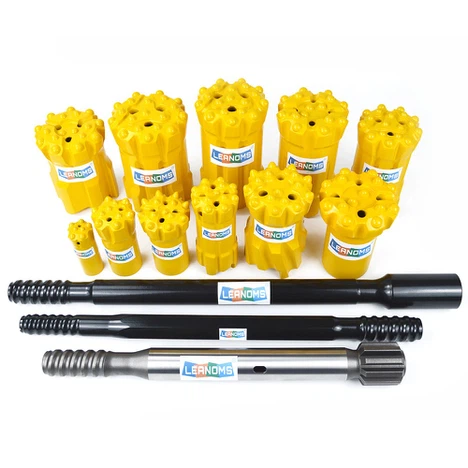
Thread Type:
Threaded drill rods feature a threaded connection at both ends. The thread type may vary, and it is essential to ensure compatibility with the drill rig and other drilling components. Common thread types include T-thread, R-thread, and other proprietary thread designs.
Thread Size:
The diameter and pitch of the threads on the drill rod are critical for compatibility with other drilling components, such as couplings, adapters, and drill bits. The thread size must match the specifications outlined by the drill rig manufacturer.
Length:
Threaded drill rods come in various lengths, and the appropriate length is chosen based on the drilling requirements. Longer rods may be used for deeper drilling, while shorter rods are suitable for shallower depths.
Diameter:
The diameter of the threaded drill rod is a crucial specification. It must match the specifications of the drill rig's chuck and the intended drill bit. Common diameters include standard sizes like 1 inch, 1.5 inches, 2 inches, and more.
Surface Treatment:
Threaded drill rods often undergo surface treatments to enhance their durability and resistance to wear and corrosion. Surface treatments may include processes like carburizing, heat treatment, or coatings.
Straightness:
Straightness is an important factor in the performance of threaded drill rods. Straight rods ensure accurate drilling and reduce the risk of deviations or errors in the borehole.
Hardness:
The hardness of the threaded drill rod is crucial for its wear resistance. Hardened rods are better able to withstand the abrasion encountered during drilling in various geological formations.
