


What Is Down-the-hole Hammer Drilling?
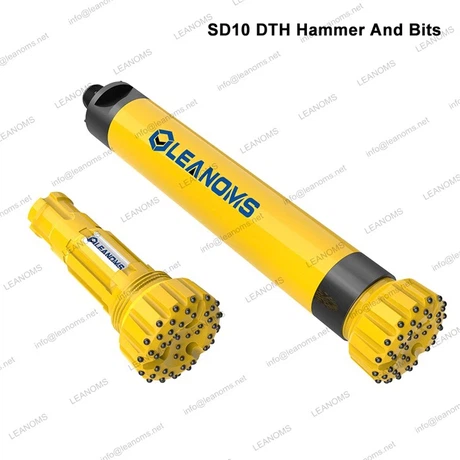
Down-the-hole (DTH) hammer drilling is a rotary-percussive method where the hammer is placed directly behind the bit at the bottom of the hole. Compressed air (or sometimes fluid in water-hammer variants) drives a piston to repeatedly strike the bit, while rotation indexes the cutting buttons.
In simple terms:
Impact energy is delivered at the bit, not lost through long drill strings.
Exhaust air helps flush cuttings out of the hole.
The system is particularly strong in hard, competent rock where impact fragmentation is efficient.
Benefits of down-the- hole hammer drilling
Below are the most practical, field-relevant upsides-mapped to what matters in operations: meters per shift, hole quality, and cost per meter.
1) High Penetration Rate in Hard Rock
DTH is widely used because it drills hard rock fast. Research and technical references frequently highlight high rate of penetration (ROP) benefits because impact energy is concentrated at the bottom.
Operational meaning:
Faster drilling in granite, basalt, quartzite, and other hard brittle rock
Less "stalling" when formations get tougher
More predictable shift output when rock is consistent
2) Excellent Hole Straightness and Geometry
DTH systems are known for producing straighter holes, particularly important for:
production drilling (blast hole accuracy)
foundation/deep foundation methods
water well drilling where casing and pump alignment matter
Multiple technical sources emphasize improved hole straightness due to a more rigid bottom-hole assembly and direct impact at the bit.
3) Reduced Power Loss Over Depth
One classic DTH advantage is minimal energy loss with depth, compared with top-hammer drilling where energy must travel through rods.
Operational meaning: deeper holes don't "slow down" as dramatically.
4) Strong Hole Cleaning with Air Flushing
Air exhaust helps carry cuttings out efficiently-especially in dry drilling. This supports stable drilling by reducing regrinding and bit overheating. (Good airflow and minimal leakage matter a lot.)
5) Works Across Many Sectors
DTH methods show up in:
mining & quarry blast holes
geothermal drilling
construction (micropiles, foundations)
well drilling dth hammer applications, especially hard rock aquifers
LEANOMS also highlights DTH suitability for hard rock and different geological circumstances.
6) Reliable Performance in Competent Rock
In solid, stable formations, DTH is straightforward to run:
stable bit contact
predictable wear patterns
consistent hole quality
This is one reason many contractors standardize on rock tools DTH hammer systems for hard formations.
Drawbacks in down-the-hole hammer drilling
1)Simple to dress in
Down-the-hole hammers have some drawbacks even if they have several benefits during usage. Wear and other elements cause down-the-hole hammers to be vulnerable to damage during extensive usage. Particularly in hard rock conditions, the service life of down-the-hole hammers may be compromised; thus, damaged components must be replaced timely to guarantee the seamless advancement of drilling activities.
2)Simple to block
Down-the-hole hammers may become clogged when facing more difficult rock formations, which greatly affects drilling activities. Should neglect in time, the obstruction will substantially hinder the drilling process. Thus, building workers must be able to handle obstacles and implement efficient cleaning policies to guarantee the continuation and effectiveness of operations.
3)High volume
The volume of noise produced by DTH hammers during operation may affect the surrounding environment and construction workers in certain ways. Therefore, while selecting down-the-hole hammer drilling technology, one should take related noise reduction actions and take consideration of the possible impact of noise on the surrounding environment to minimise the interference of construction on surrounding inhabitants and the ecological environment.
4)Limit of maximum diameter
Currently, the more developed single-body down-the-hole hammer has certain restrictions on the maximum diameter, which makes it hard to directly implement it to the building of big-diameter pile foundation projects. Thus, for big projects, building workers must choose appropriate drilling gear depending on real circumstances to guarantee construction quality and efficiency.
5))Maintenance and care
Timely maintenance and upkeep are very crucial when employing down-the-hole hammer drilling technology. Effective extension of the equipment's service life depends on routine examination of the many down-the-hole hammer pieces and prompt replacement of worn-out components. Furthermore, operators should be conversant with the working principle and use down-the-hole hammer techniques to maximise its performance and guarantee the seamless advancement of drilling activity.
With its great efficiency, simplicity, and broad variety of uses, down-the-hole hammer drilling technology basically holds a significant role in the contemporary drilling sector. Though there are certain flaws, scientific upkeep and suitable technological enhancements will help to address them very successfully. Down-the-hole hammer drilling technology will undoubtedly reveal its special benefits in more disciplines in the future.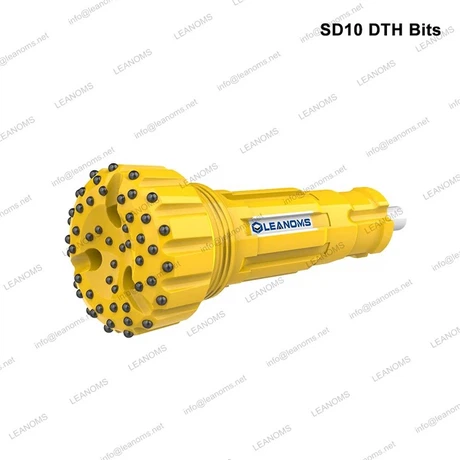
When DTH Hammer Drilling Is the Best Choice
Choose DTH if you have:
competent hard rock
need for straight holes and consistent diameter
medium to deep hole requirements
adequate compressor capacity (pressure + flow)
need for production drilling efficiency
Consider alternatives (or hybrid setups) if you have:
collapsing overburden without casing strategy
heavy groundwater inflow without proper control plan
strict dust/noise limits without mitigation tools
Expert Insights: Trends and "What Pros Are Doing Now"
Trend 1: Higher Pressure Systems for Higher Productivity
The market trend is toward high pressure DTH hammer setups to improve energy transfer and drilling speed-especially in hard rock production drilling. This is consistent with modern tool catalogs and technical references emphasizing productivity gains through system rigidity and performance.
Trend 2: Data-Driven Drilling (Monitoring Impact Frequency and Efficiency)
Research on DTH drill monitoring (e.g., identifying impact frequency) reflects a broader shift: using measurable signals to optimize performance rather than relying only on operator feel.
Trend 3: Hybrid Programs (Rotary/Tricone + DTH)
Many operations start with rotary/tricone through overburden, then switch to DTH in hard rock-reducing risk while maximizing ROP where DTH shines.
Scientific Data: What Studies Suggest
A water-driven DTH/water-hammer thesis reports penetration rate more than twice as high and improved hole straightness in its evaluated setup, plus reduced energy consumption (context-specific but useful to show principle).
Academic work on DTH drilling and monitoring highlights that DTH can provide high ROP, low power loss, and good hole geometry as operational advantages.
Research on DTH drill bits emphasizes that bit structural properties influence drilling performance-supporting why bit selection and design matter.
Practical Field Cases and User Feedback
Case 1: Quarry Blast Holes in Hard Limestone
A contractor switched from rotary to dth hammer drilling for a bench with harder bands. Result: higher ROP and straighter holes, improving fragmentation consistency after blasting.
What made it work: correct compressor sizing + tight hose connections (minimized leakage).
Case 2: Water Well Drilling in Granite
A well drilling dth hammer setup delivered better straightness and faster progress after the casing shoe, reducing time spent on reaming and tool stuck events.
Operational note: stable flushing and correct air management are critical (air control guidance appears in technical drilling manuals).
Case 3: "We Upgraded to High Pressure-But Only After Fixing the System"
A mining team reported that moving toward a high pressure DTH hammer improved output only after they addressed air leaks and hose sizing. Without that, the extra pressure didn't translate into productive impact at the bit.
FAQ
Q1: What are the main advantages of down-the-hole hammer drilling?
A: High penetration in hard rock, excellent hole straightness, and low energy loss with depth.
Q2: What are the disadvantages of DTH drilling?
A: Compressor dependence, sensitivity to air leaks, difficulty in unstable ground without proper casing strategy, and dust/noise controls in dry drilling.
Q3: Is DTH drilling good for water wells?
A: Yes-especially in hard rock aquifers where straight holes and stable ROP matter; proper air control and hole management are essential.
Q4: When should I choose high pressure DTH hammer drilling?
A: When the formation is hard and competent and you can support pressure/flow with the right compressor and low-leak system; otherwise benefits may not materialize.
Conclusion: Is DTH Hammer Drilling Worth It?
Yes-when the geology and system setup match.
If you're drilling competent hard rock and need straight, accurate holes, dth hammer drilling is often one of the most efficient options.
If you're in unstable ground, lack air capacity, or ignore leakage and dust control, the disadvantages can wipe out the benefits.
That brings us back to the opening conversation:
DTH isn't "better"-it's "better when it fits."
